MASTERCLASS 1890-1895 Historical Garment - Advanced School of Calascio
How to enroll for MASTERCLASS 1890-1895 Historical Garment - Advanced School of Calascio
1890-1895 Historical Garment: Analysis and Construction
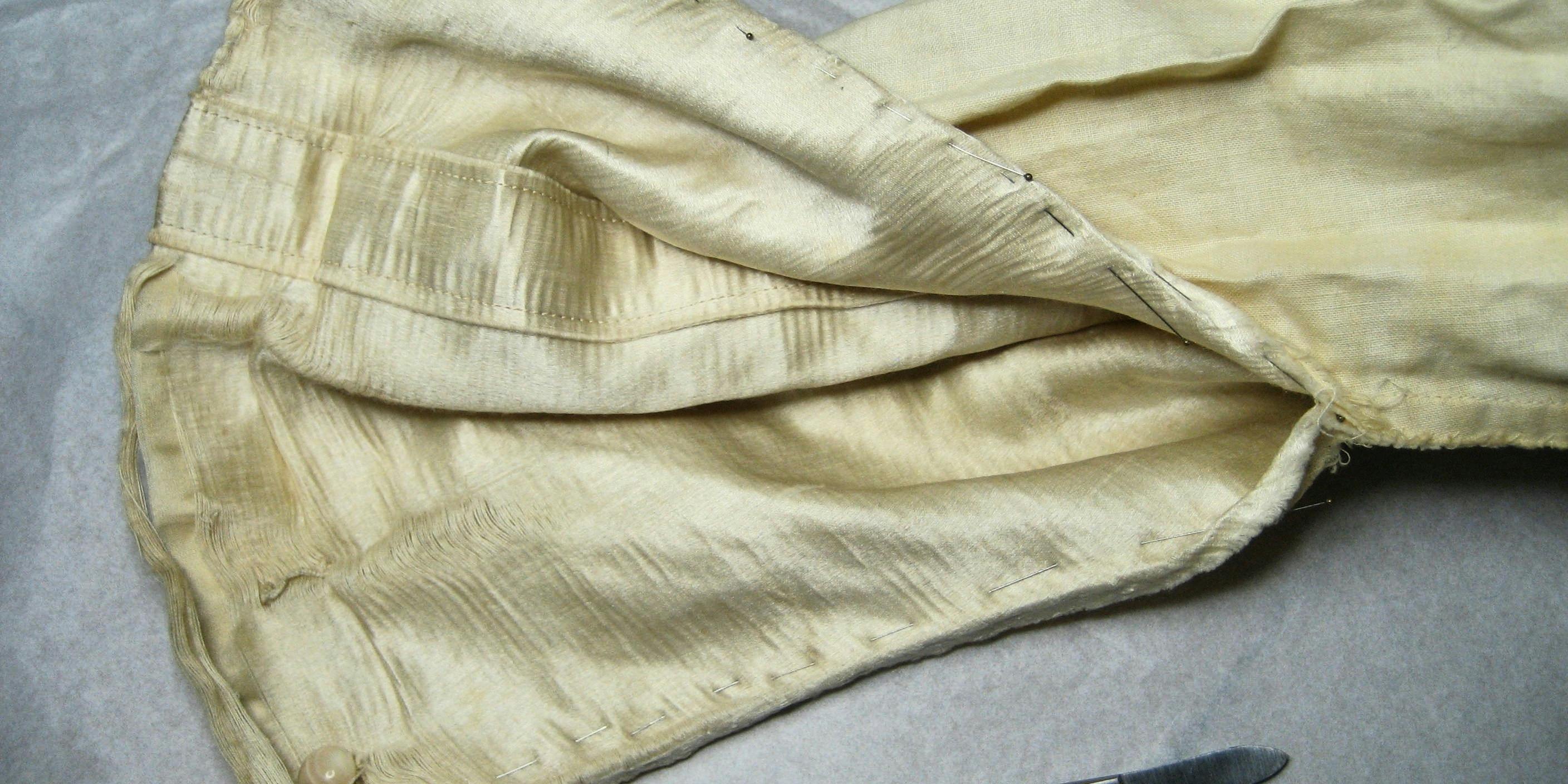
Following a brief presentation of the restoration project, the course includes observing stitching techniques in the historical garment for hand-execution, studying the garment's cut and construction methods used to achieve the sleeve’s dramatic fullness, as well as the skirt and bodice characteristics.
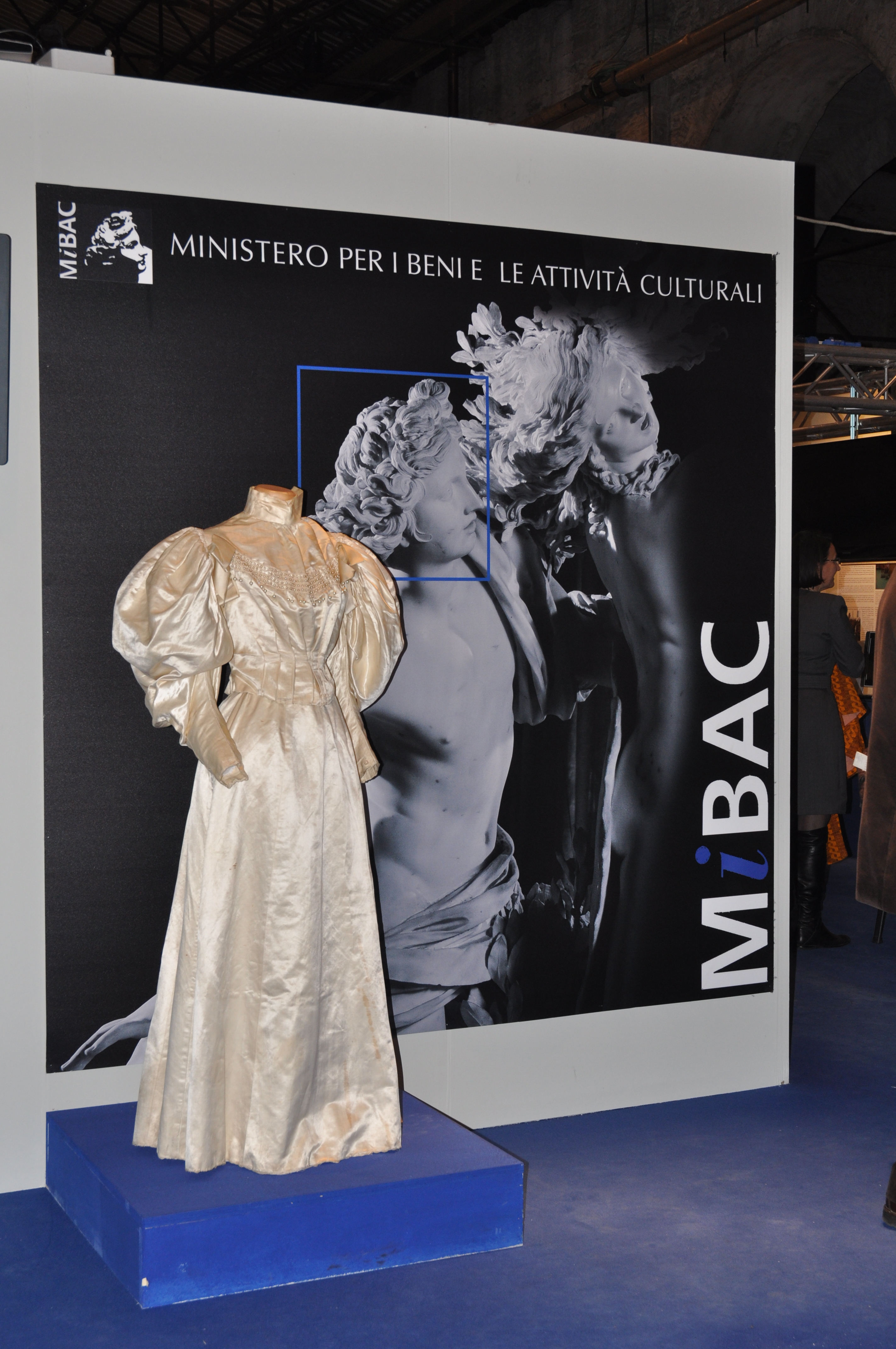
This silhouette’s defining feature is the sleeve – the fullest achieved in the 19th century – and the gathering technique also found in Scanno’s traditional dress.
The hourglass silhouette, central to this masterclass, features sleeves reaching their maximum volume during this period.
The garment showcases ‘manica a prosciutto’ (leg-of-mutton sleeves), whose distinctive volume characterizes Scanno’s traditional dress – considered Abruzzo’s most representative costume, ‘imparting a stately, almost regal bearing to the wearer’.
From 8 to 13 June 2026
course length: 35 hours |
Monday 8: 10:00 AM – 1:00 PM; 2:00 PM – 6:00 PM
Tuesday 9 to Friday 12: 9:00 AM – 1:00 PM; 2:00 PM – 5:00 PM
On Saturday 13 morning, the final presentation event will be held, featuring an exhibition of the course participants' work.
Number of Participants*: 10 (* n.2 will be reserved for residents of Calascio)
WHERE CALASCIO (AQ)
total cost: € 300,00
The tuition fee includes:
- Attendance to in-person lessons
- Course materials
- Light lunch
- Certificate of attendance
Required equipment/materials for students:
- 10 or 15cm straight and curved scissors
- 10 or 15cm straight and curved tweezers
- 10 or 20cm ruler
- Notebook
- Pencil
- Needles No. 10, 12"
With the contribution of the pilot project for cultural, social and economic regeneration ‘Rocca Calascio - Luce d'Abruzzo’, promoted by the Municipality of Calascio and selected by the Abruzzo Region under the Italy's National Recovery and Resilience Plan (PNRR) of the Ministry of Culture (Investment Line A – M1.C3 – Investment 2.1 – ‘Attractiveness of Historic Villages’), funded by the European Union – NextGenerationEU.
Program:
. Introduction to the masterclass, pattern drafting, and cutting
. Sleeve cutting, stitches to be used, and cuff seams
. Creating the shoulder shirring/gathering
. Sleeve assembly
. Skirt construction
. Project Presentation
la docente: Concita Vadalà
A restorer and weaving enthusiast since age 17, she has worked on over 60 dressed devotional sculptures, including pieces from two major collections: the Museo dell'Istituto degli Innocenti in Florence and the 42 dressed wooden sculptures at Trapani’s Museo Agostino Pepoli. A scholar of historical garments, she has restored and curated the display of approximately 100 garments and accessories. Among these are collections from Nanni Guiso Villa l'Apparita (Siena) and the Museo Nanni Guiso in Orosei (NU), featuring four dresses by the Callot Soeurs and stage costumes created for mezzo-soprano Teresina Burchi – now housed at the Rocca di Sestola Museum (PT).
Her restoration work has profoundly deepened her expertise in yarns and textiles, tailoring skills, and understanding of stitching and embroidery techniques. Restoring historical garments requires not only repair but often reconstructing missing sections to preserve the garment’s integrity. This demands mastery in creating foundational structures that replicate the original cut and style, as well as crafting period-accurate mannequins tailored to the garment’s dimensions – ensuring the piece is displayed without distorting its form.