

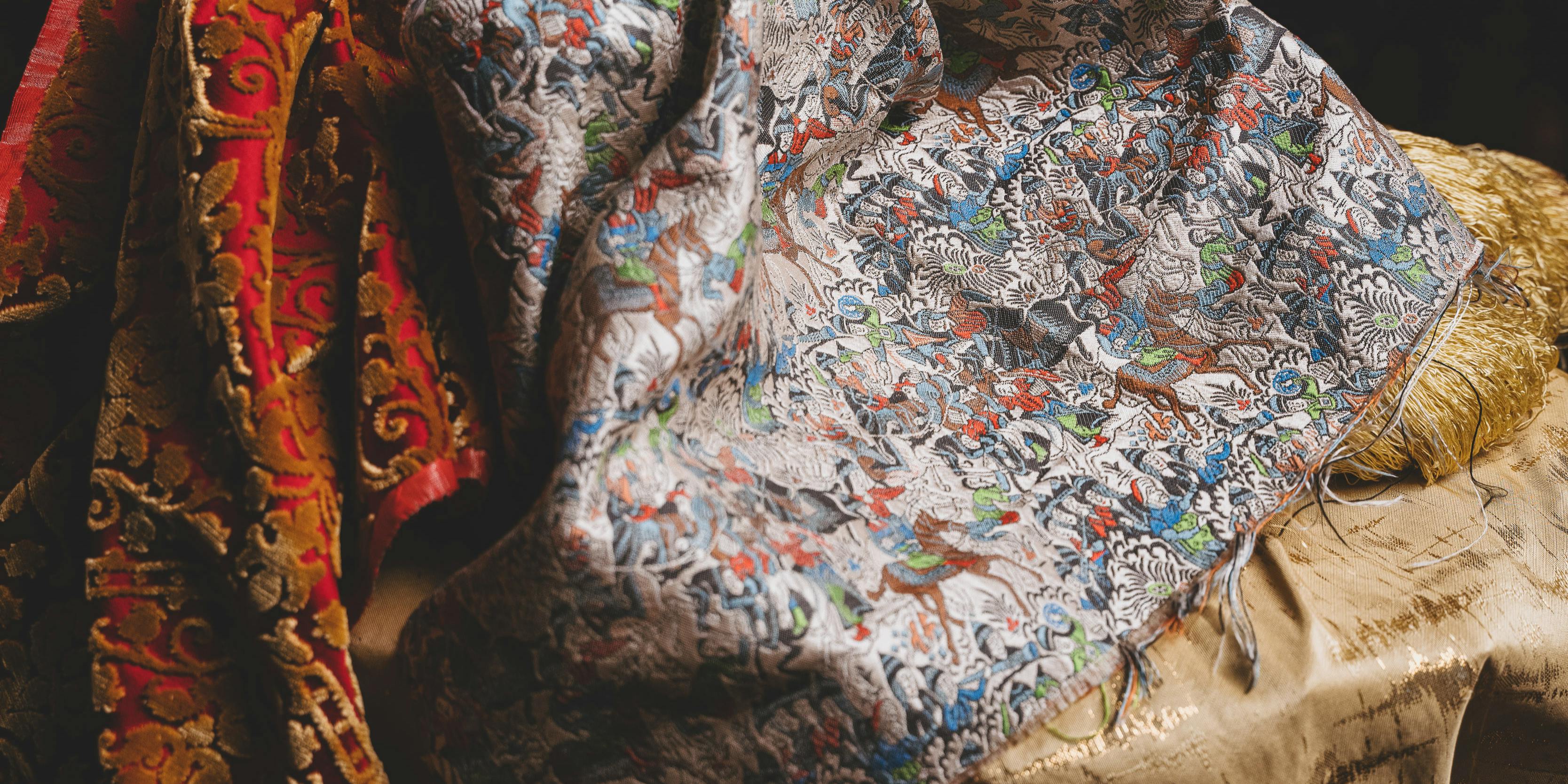
Lampas and Damasks
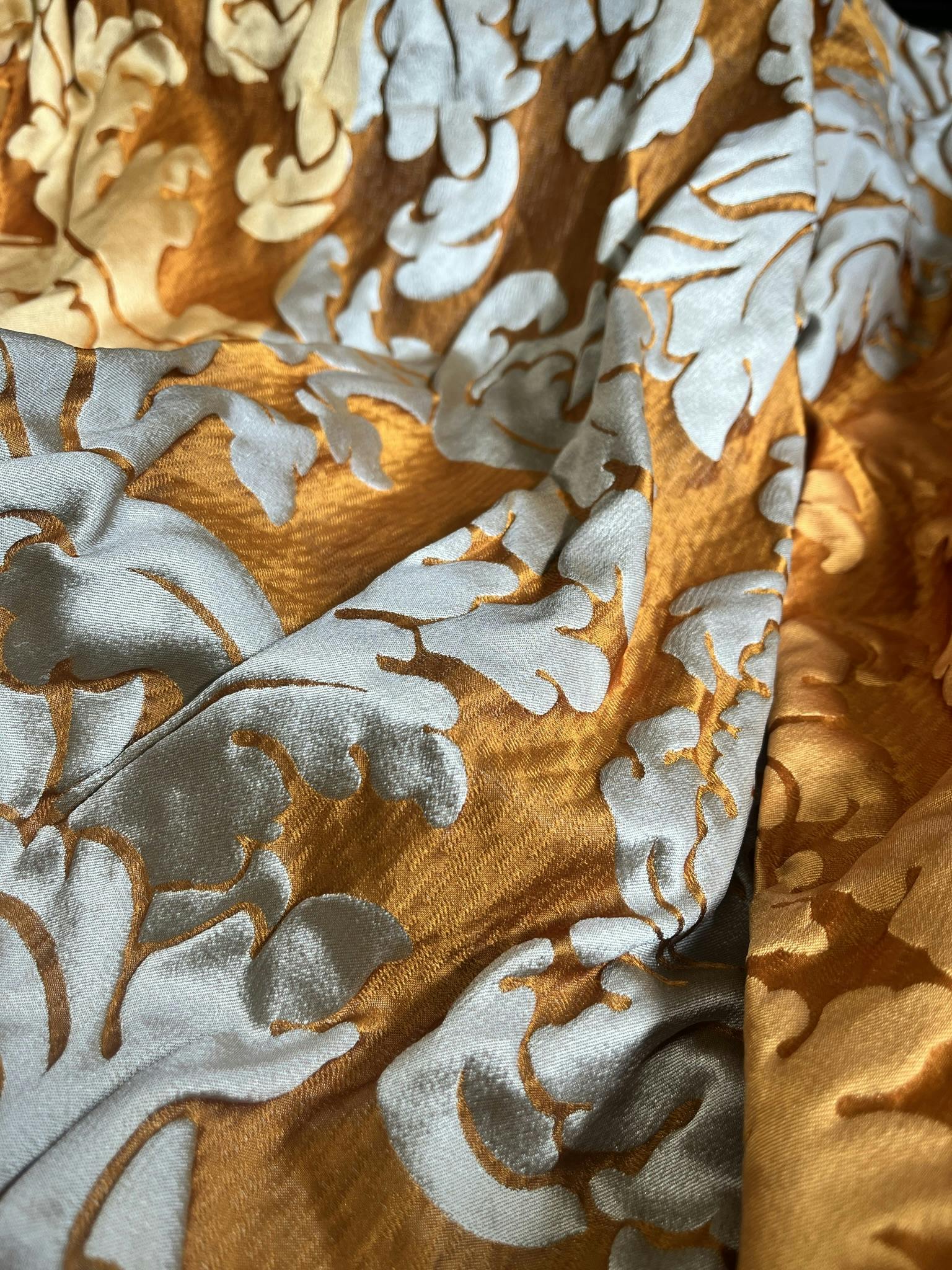
"Colonna" Damask
"Colonna" Damask
The "Colonna" damask has been part of Giuseppe Lisio’s production since 1920. It is distinguished by a design featuring a large-scale arrangement of oak leaves, mirrored leafy vines, and compositions centered around half pinecones. The generous repeat of the pattern is ideally suited to covering large wall surfaces, lending interiors an atmosphere of sumptuous elegance.
The design dates back to the seventeenth century and was adapted to textiles produced using various weaving techniques. It later inspired the Baroque production of embossed leather wall coverings (corami), which were displayed alongside their textile predecessors in noble residences, institutional buildings, and ecclesiastical interiors.
Composition: Silk
Available in: Various colors
Width: 140 cm
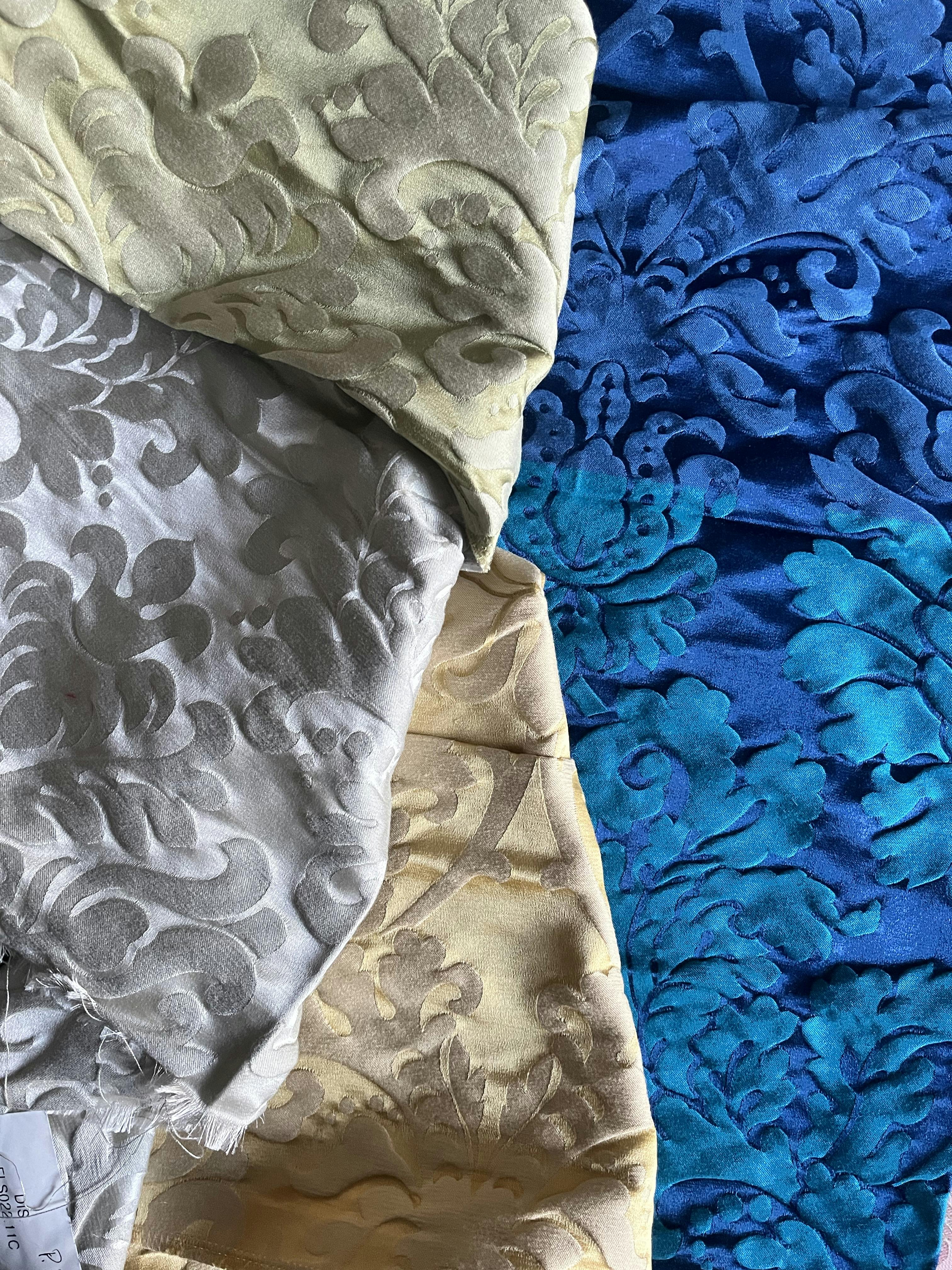
"Chigi" Damask
"Chigi" Damask
This sumptuous pattern embodies the richness of the Baroque style while retaining an underlying Renaissance design structure. Giuseppe Lisio began producing it around 1926, and, now as then, its finest application is in interior decoration, particularly as upholstery for period furniture.
In 1965, the "Chigi" fabric was selected for Carol Reed’s film The Agony and the Ecstasy, where it was used to create the canopy curtains and bedcover for Pope Julius II’s bed, portrayed by Rex Harrison.
Composition: Silk / Cotton
Available in: Various colors
Width: 140 cm
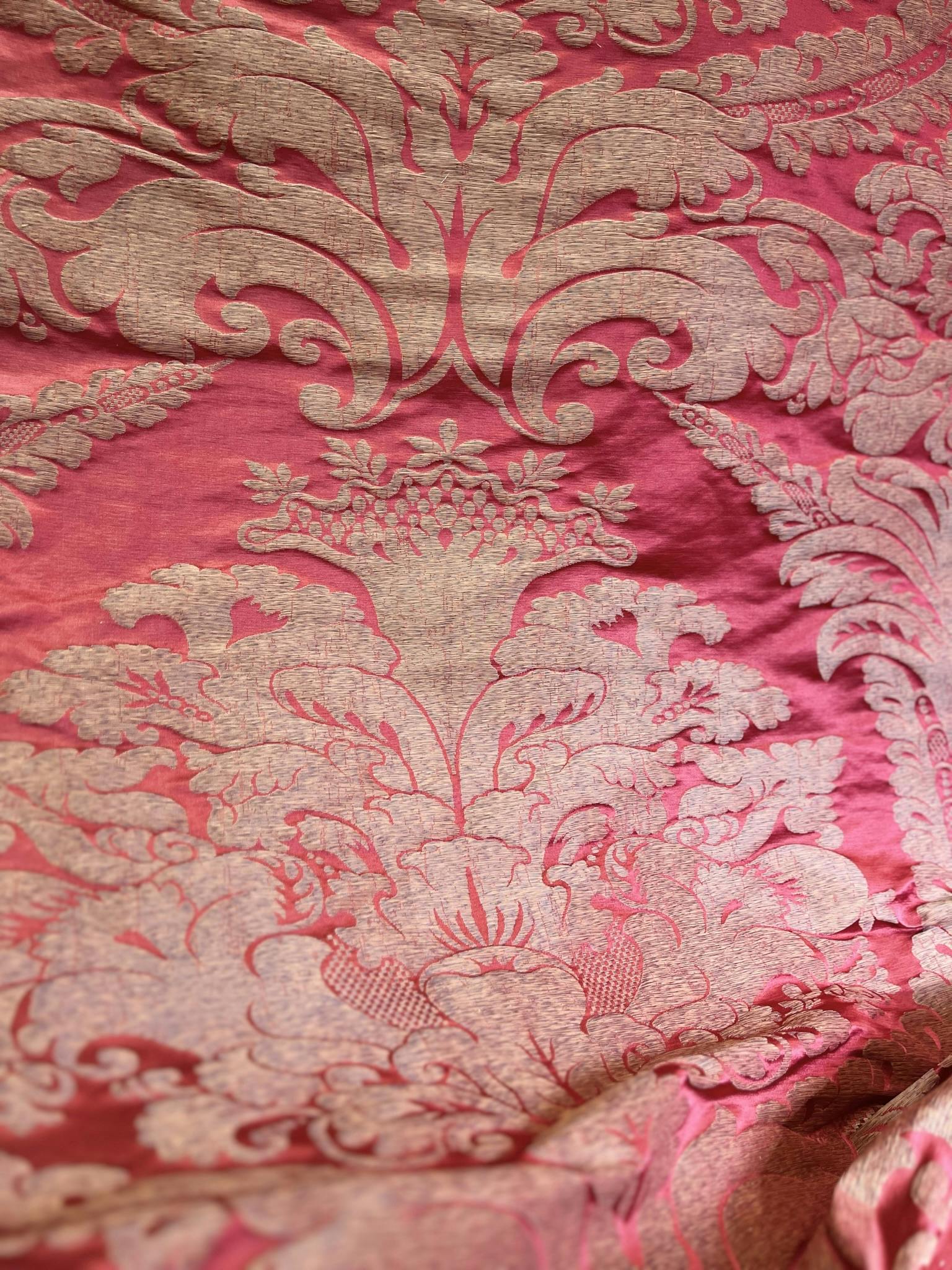
"Soprarizzo" Damask
"Soprarizzo" Damask
This fabric was created by Fidalma Lisio in the 1970s as a reinterpretation of historical textile designs. Although its direct source of inspiration is unknown, an analysis of the pattern suggests a date between the late eighteenth century and the first half of the nineteenth century. The design brings together a variety of stylistic elements characteristic of eclecticism, each of which remains clearly identifiable.
The closed lattice structure, with a central leafy floral motif, is typical of Renaissance design, as are the pomegranates of varying sizes, pears, and oval fruits crowned with leaves. These motifs also appear as decorative elements in late Baroque à dentelle textiles. Rococo influences are evident in the vase-shaped motif with undulating edges at the apex of the floral composition, the checked and circular compartments, and the palm-like forms that link the latticework.
This pattern is ideally suited to both interior decoration and historical costume design for theatre and film.
Composition: Silk / Cotton / Viscose
Available in: Various colors
Width: 140 cm
"Viticci" Damask
"Viticci" Damask
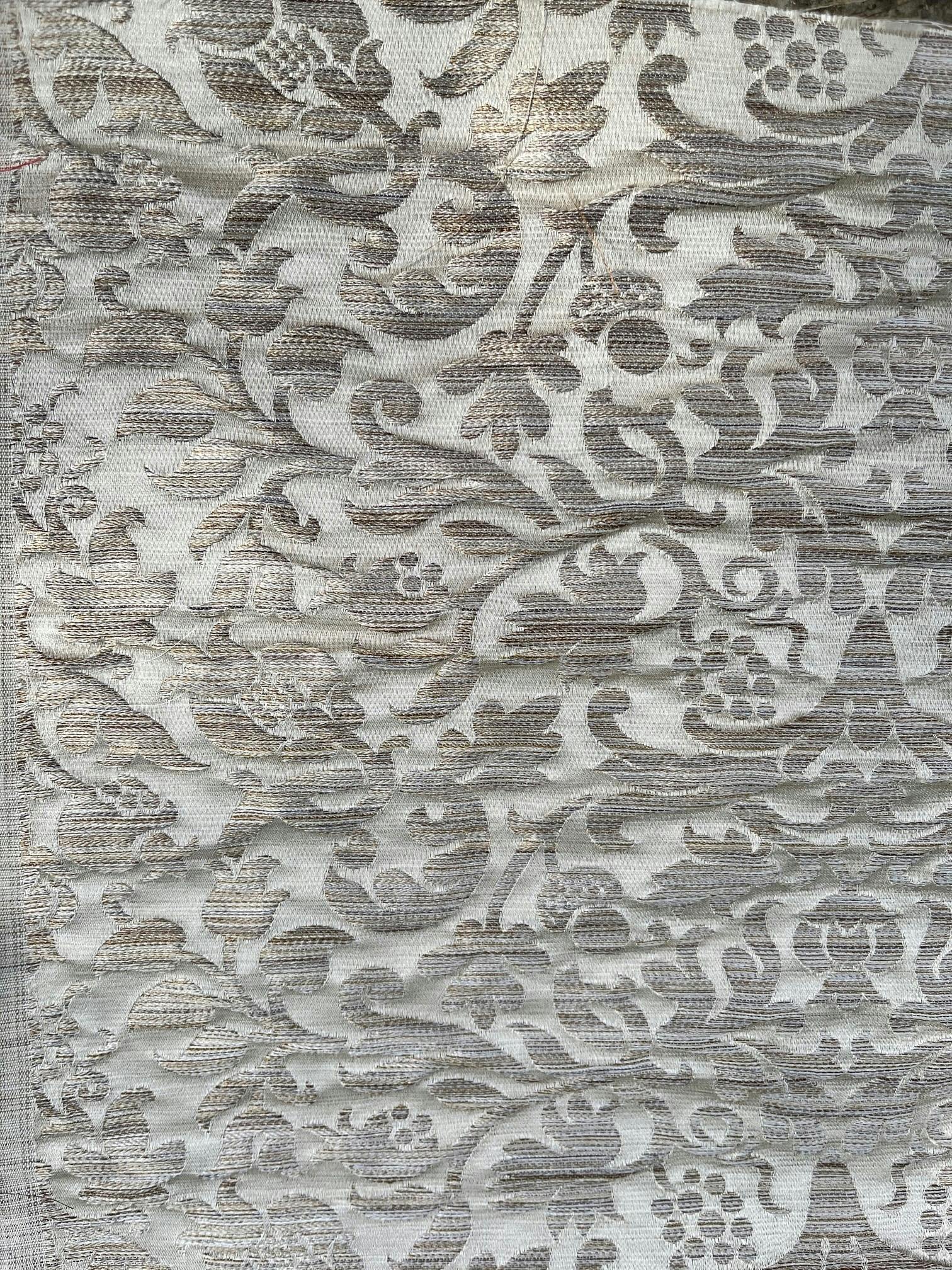
Giuseppe Lisio first introduced the "Viticci" pattern around 1925 in both damask and velvet versions. The design is inspired by the textile patterns characteristic of the last quarter of the sixteenth century, when motifs intended for dress fabrics became noticeably smaller in scale.
The composition features small pomegranates and thistle flowers, oak sprigs with acorns, vine tendrils with grape clusters and leaves, and delicate branches with buds and heart-shaped leaves. All of these motifs had been widely used in Renaissance textile design as prominent decorative elements, their generous scale making them central to the overall composition. In this design, however, they are significantly reduced in size and become integral parts of the pattern’s rhythmic development, while preserving their distinctive forms and symbolic associations.
Composition: Silk
Available in: Various colors
Width: 140 cm
"Imperiale" Damask
"Imperiale" Damask
"Farfalle" Lampas
"Farfalle" Lampas
oriental iconography
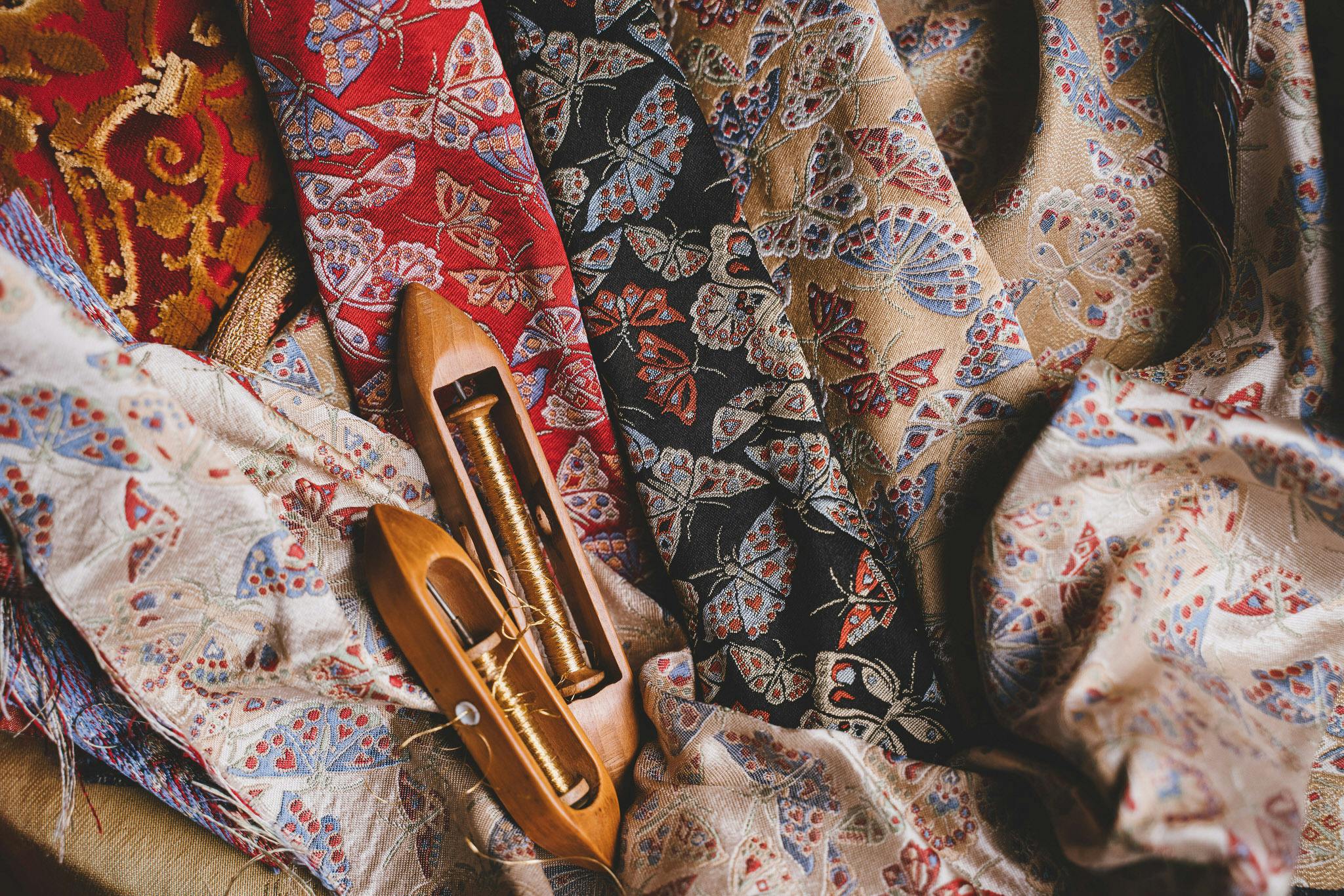
‘Farfalle’ is one in a series of fabrics made especially precious by use of extremely fine silk threads and by the sheer richness of the weaves, which in a multitude of colours describe patterns not infrequently illuminated by gold.
Set up on the loom in the second half of the 1920s, these lampases stand out for their small decorative modules, defined with great attention to the smallest details. The motifs are drawn from Oriental iconography; the subjects are geometric, phytomorphic, or zoomorphic – as in the case of these ‘butterflies’.
- composition Silk
- colors Ivory / Yellow / Red / Black
- h 140 cm
"Guerrieri" Lampas
"Guerrieri" Lampas
sultan Suleiman conquering Jerusalem
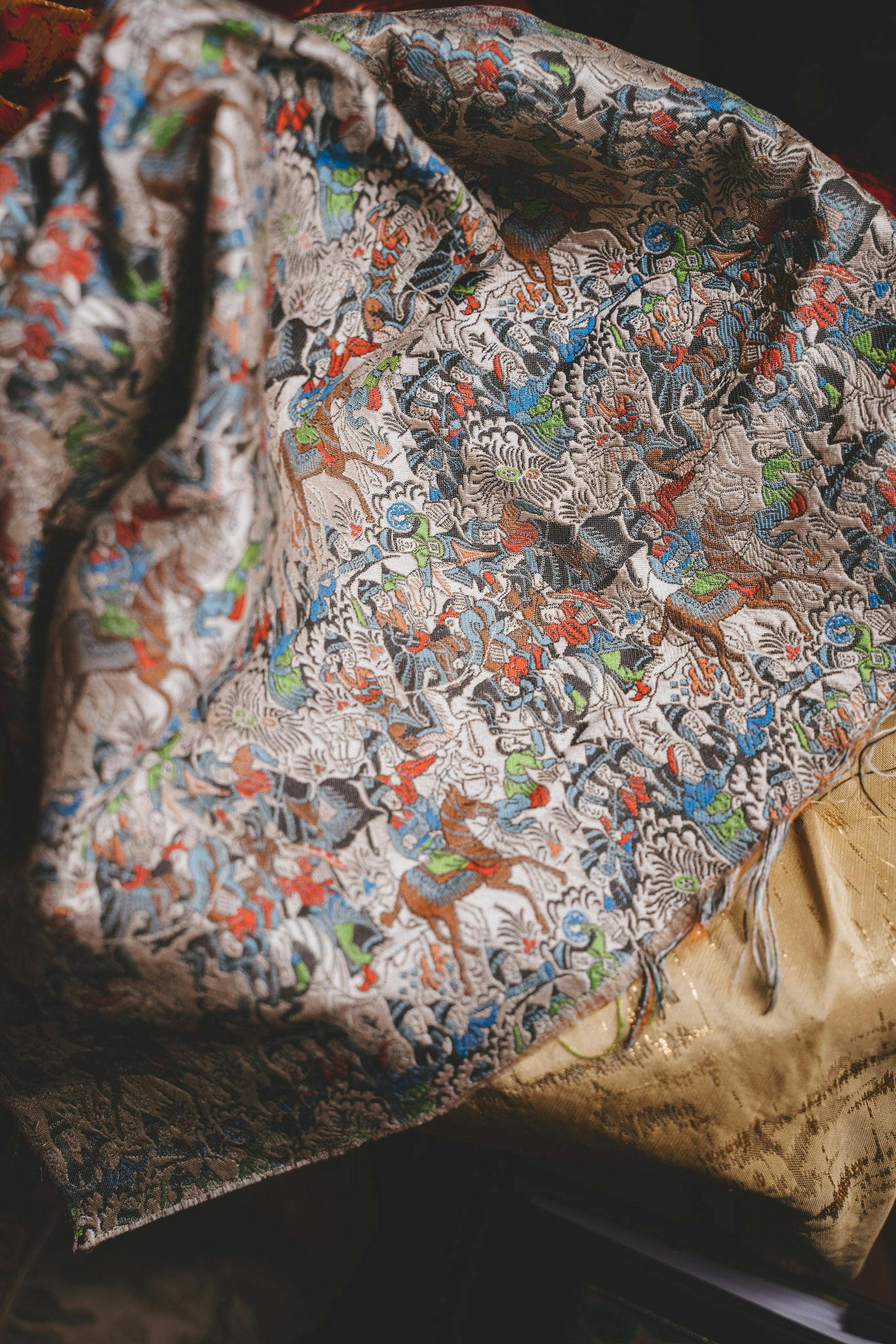
‘Guerrieri’ is a lampas set up on the loom in about 1928 as part of a series of fabrics which for about five years augmented the Arte della Seta Lisio collections with various new motifs, all characterized by patterns laid out in an exceptionally accurate manner and in high definition.
Some of the pieces propose figured scenes, as in this case: the subject is a crowded field of battle on which knights and foot soldiers engage in combat. The warriors’ dress and headgear are of Oriental inspiration.
- composition Silk
- colors Beige / Multicolor
- h 140 cm
"Duomo" Lampas
"Duomo" Lampas
an elegant motif from the mid-18th century
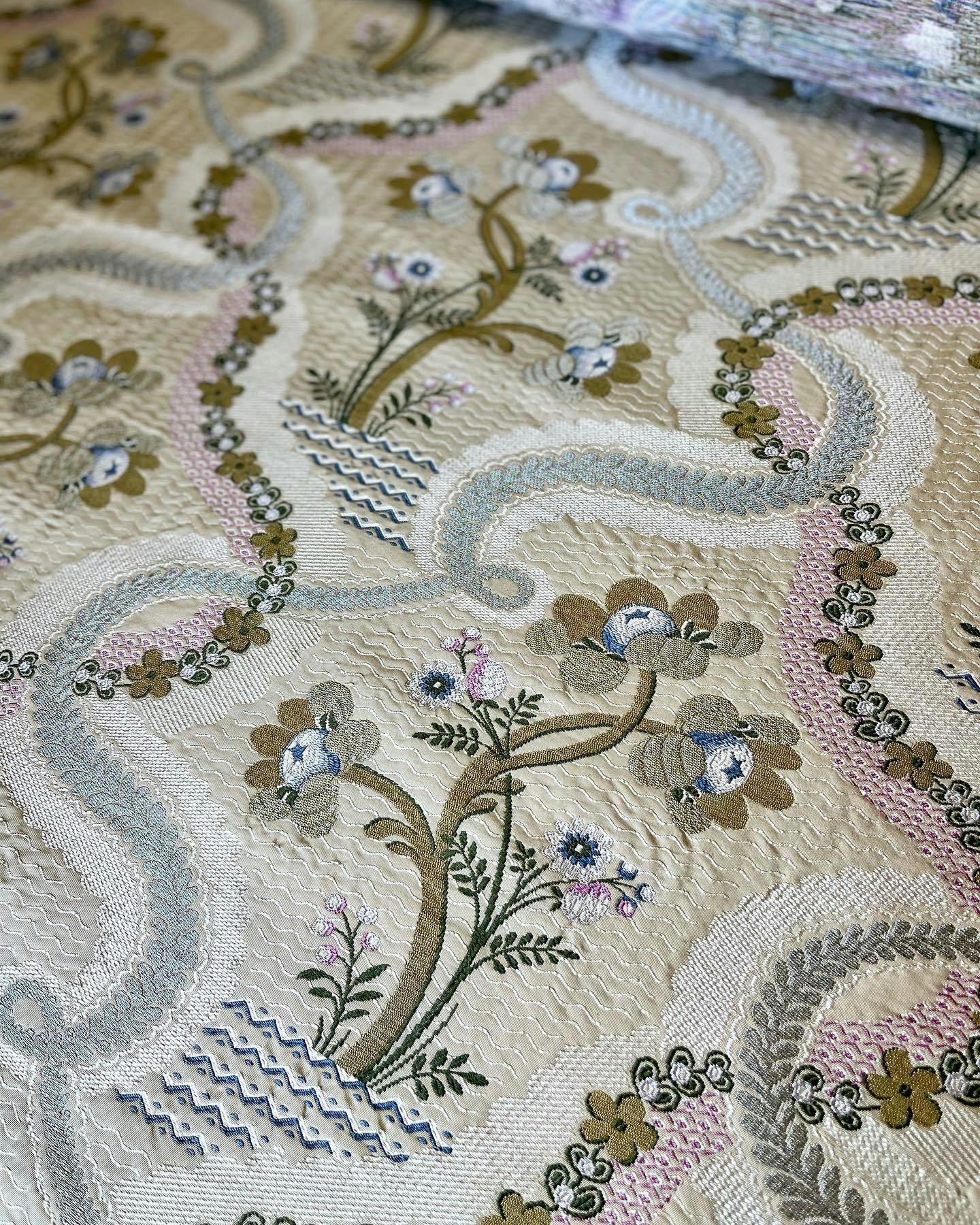
The ‘Duomo’ design presents an elegant motif from the mid-18th century taken from a church parament conserved at the Florence cathedral. Giuseppe Lisio, who set this design up on the loom for the first time in about 1920, possessed such a piece in his collection of ancient exemplars from which he drew many of his designs. As in the original, the fabric is especially rich, due to inclusion of numerous precious threads in gold and silver.
What most immediately strikes the eye is the novel arrangement of the floral motifs in the fields, delineated by strips, and the rich and meticulous workmanship which only increases the value of a refined and already beautiful fabric.
- composition Silk, cotton, viscon, metals
- colors Ivory / Red / Heavenly / Beige
- h 130 cm
"fondo Veronese" Lampas
"fondo Veronese" Lampas
inspiration by Paolo Veronese
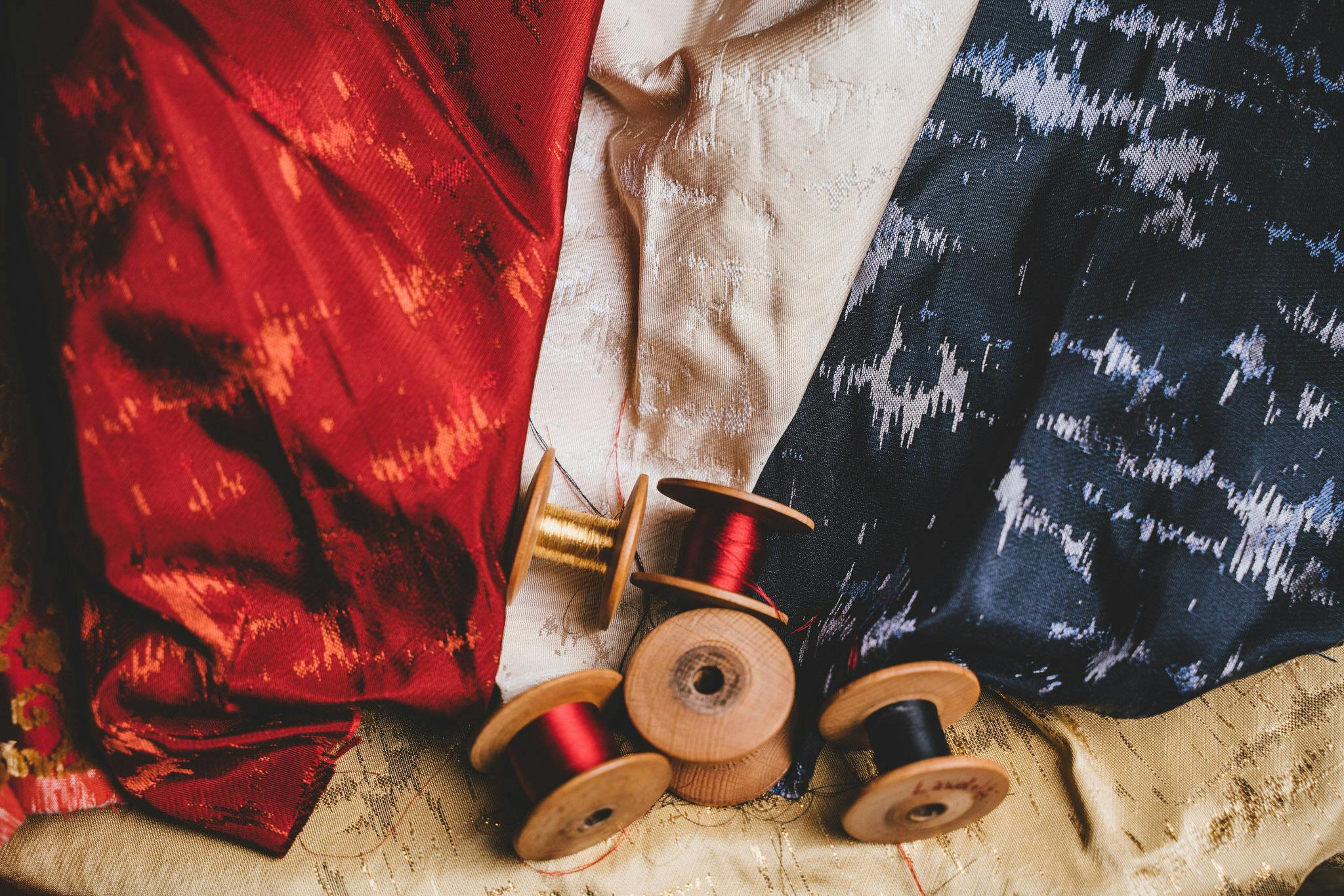
‘Fondo Veronese’ was put into production in 1915, together with its coordinate, the ‘Veronese’ brocade. The inspiration for the fabric was Venice Enthroned Between Justice and Peace by Paolo Veronese, in Venice’s Palazzo Ducale.
Due to the absence of gold and silver brocading in the fabric, which leaves the figured ground – with its variegated effects in contrasting colours – fully visible, this lampas was very popular both matched with the more precious brocaded version and as a standalone, above all for furnishings.
- composition Silk
- colors Ivory / Red / Green / Light Blue / Black
- h 130 cm / h 140 cm
"Luini" Broccatelle
"Luini" Broccatelle
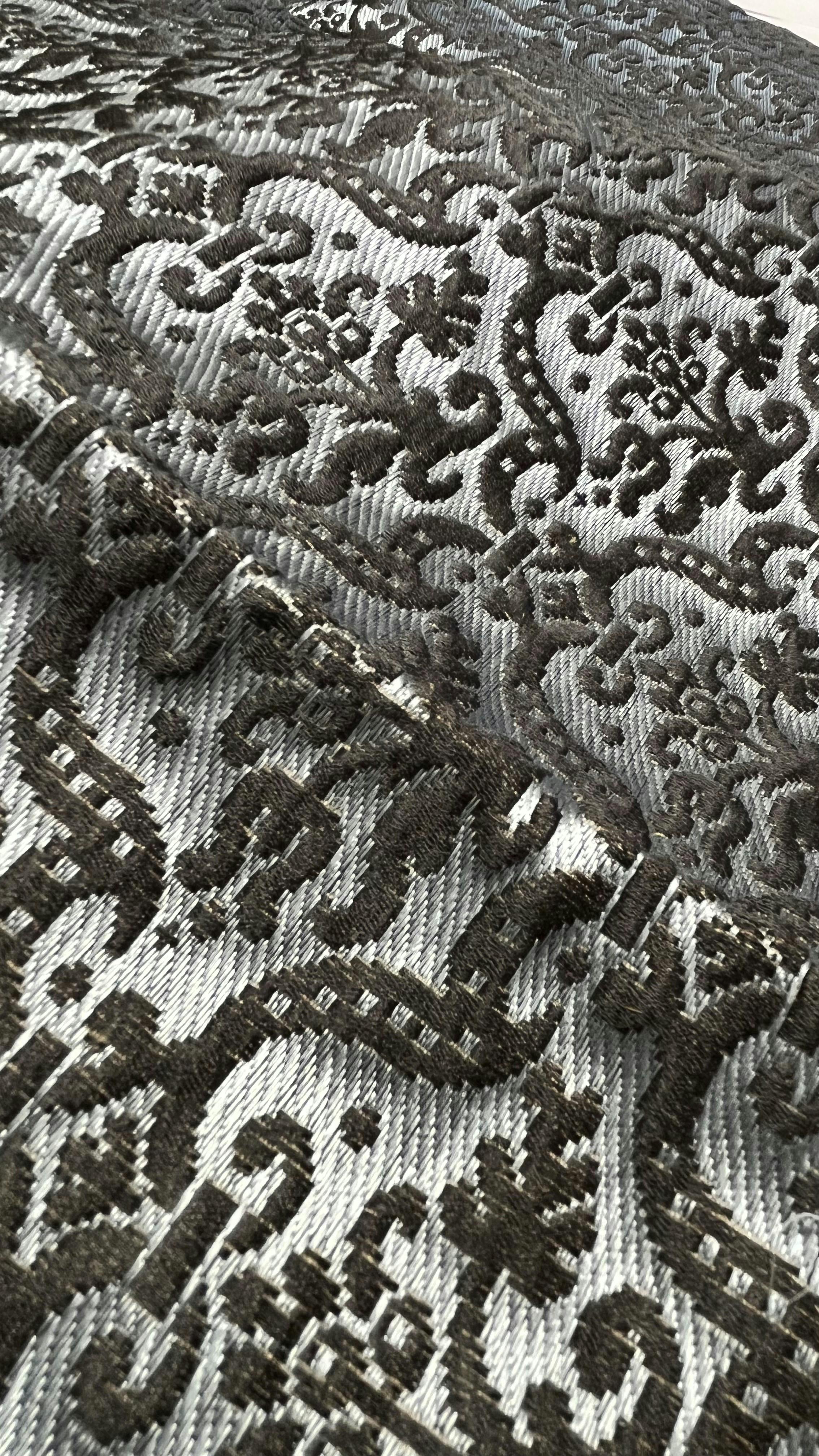
Luini was created around 1926 and produced in both damask and velvet, in three different scales. The damask version was selected as the wall upholstery for the compartments of the Royal Train of the House of Savoy, when, between 1926 and 1928, Giuseppe Lisio received a major commission to supply a variety of fabrics for the interior furnishings of the state carriages and private cabins.
The design draws inspiration from the decorative vocabulary of early seventeenth-century textiles, as seen in the collections of historic fabrics preserved in many museums of decorative arts, as well as in period portraiture, where figures are depicted wearing sumptuous garments made from this type of fabric.
Composition: Silk / Linen
Available colors: Various
Width: 140 cm