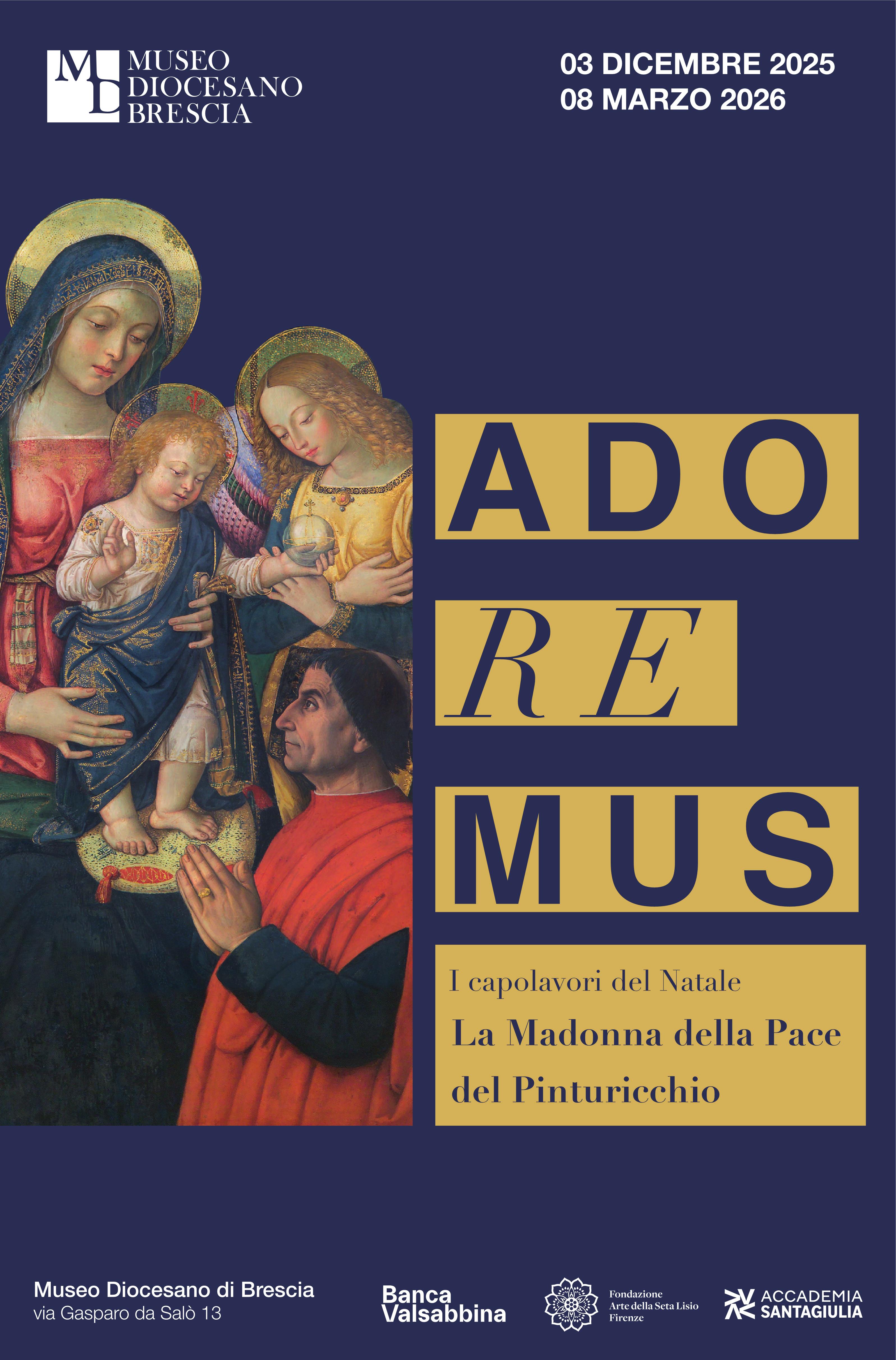
ADOREMUS. The Madonna of Peace by Pinturicchio
In an era marked by conflicts, losses, and growing global vulnerabilities, the Museo Diocesano di Brescia presents a journey of hope: the encounter between Renaissance pictorial genius and the refined art of embroidery.
This dialogue comes to life in the fifth edition of Adoremus, one of the museum’s most anticipated exhibitions, dedicated this year to the Madonna della Pace (c. 1490) by Pinturicchio, born Bernardino di Betto.
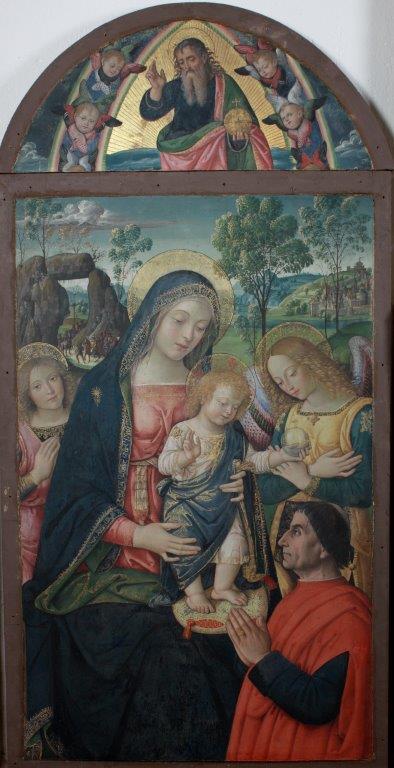
The artwork, arriving in Brescia for the first time from the MARec - Museo dell’Arte Recuperata dell’Arcidiocesi di Camerino e San Severino Marche, is a landmark of Umbrian Renaissance art. Dating to around 1488–1489, it fully embodies the spirit of Adoremus: an invitation to contemplation and a message of hope, in stark contrast with a present marked by crisis and uncertainty.It is not simply a Madonna and Child scene: the composition is animated by several figures, including the patron, the wealthy canon Libero Bartelli, portrayed with remarkable realism in his proud profile, characterised by almost tactile physiognomic details — from his aquiline nose to the raised skin marks on his face.
Grace and symbolism: The Virgin, richly dressed and slightly leaning forward, holds the Child, who blesses a transparent globe. Two angels frame a mountainous landscape and a fortified city in the background. Yet it is the extraordinary attention to detail that truly stands out: the golden embroidery on the garments, the multicoloured brocade band decorated with acorns, and the damask cushion. Above all, the Child’s small garment captures attention, featuring a precious engraved plaque in the shape of a winged mermaid-sphinx, conveying a sense of fairy-tale wonder. Here, Pinturicchio reveals his training as a miniaturist, with vibrant colours — vegetal greens, cerulean blues, and abundant gold — together with a passion for goldsmithing and ornamental arts.
An exhibition layout that engages the senses:
Structured across four rooms with a synesthetic concept (sight + touch), the exhibition journey culminates in the encounter with the masterpiece.
Enhancing the display is the collaboration with the Fondazione Arte della Seta Lisio, which has reproduced the precious embroidery details depicted in the artwork.
The exhibition features the reproduction of the embroidery from the Divine Child’s garment, along with around twenty textile references from the clothing worn by the figures represented in the painting, allowing visitors to admire the reconstruction of their decorative patterns.
PRECIOUS EMBROIDERIES: The Hidden Language of Garments
The Lisio Foundation focused its contribution on the meticulous reproduction of the embroidery and decorative motifs featured on the garments painted by Pinturicchio. These details are not mere ornamentation: they represent a true visual theological language.
- God the Father: The green mantle (pallium/himation) features golden meander embroidery — a symbol of new life and heavenly royalty.
- The Virgin: On the linen veil, embroidery and decorative elements evoke purity and humility; the belt with Perugian embroidery refers to the virginal birth.
- The Angels: Embroideries with palmette motifs and pseudo-Kufic inscriptions merge iconography and liturgical symbolism.
- The Patron (Bartelli): The reconstructed details of the red lucco convey messages of status and devotion.
- The Divine Child: The white dalmatic and blue pallium are enriched with golden embroidery and complex decorative motifs. The neckline embroidery, in particular, is a masterpiece of symbolism: a winged mermaid with vine scrolls which, according to the Church Fathers (Origen and Basil of Caesarea), alludes to the descent into the underworld and the victory over death. Together with its Byzantine inspiration — especially evident in the pallium — the garment becomes a visual statement of the Redeemer’s royal and divine nature.