In Cosimo's palace. The Simbols of Power
Cosimo I de’ Medici and Palazzo Vecchio: 450 years after the reading of the papal bull appointing him Grand Duke, the exhibition “In Cosimo’s Palace. The Symbols of Power” opens on Friday, 13 December
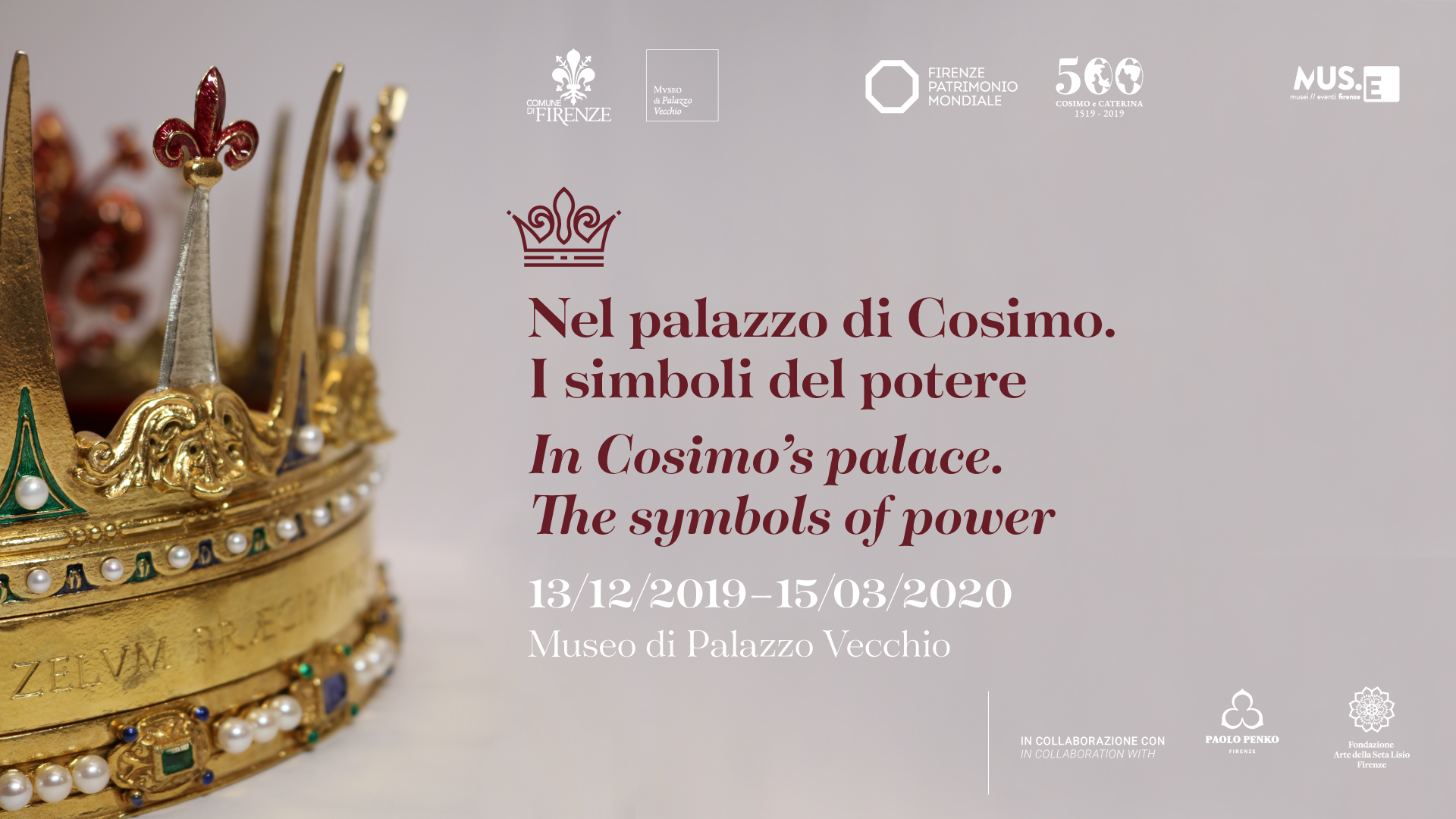
On 13 December 1569, in the Great Hall of Palazzo Vecchio, the official reading took place of the papal bull in which Pope Pius V decreed the appointment of Cosimo I de’ Medici as Grand Duke of Tuscany. Exactly 450 years later, on Friday, 13 December 2019, the special project “In Cosimo’s Palace. The Symbols of Power” opens at the Museo di Palazzo Vecchio: an initiative that brings together different forms of expression to highlight the very close relationship that Cosimo I de’ Medici had with Palazzo Vecchio, “his” ducal palace.
The initiative, curated by the Municipality of Florence and MUS.E, in collaboration with Paolo Penko and the Fondazione Arte della Seta Lisio, is part of the celebrations for the 500th anniversary of the birth of Cosimo I and Caterina de’ Medici, promoted by an organizing committee made up of more than twenty local cultural institutions and coordinated by the Municipality of Florence.
Cosimo’s Palace. The Symbols of Power, which will run until 31 August 2020, will ideally retrace, room by room, the customs, meanings, and roles of life in the Medici court palace, through a series of totems that tell the story and daily life of Cosimo I within the palace.
Appointed Duke of Florence in 1537, Cosimo I established his residence in the city government palace and moved there with his entire court in May 1540. He was responsible for important renovation and expansion works on the building, coordinated from 1555 onwards by the court architect Giorgio Vasari and carried out through a well-organized Medici building workshop.
While the Great Hall was the heart of this imposing political architecture, the setting for major events and the ideal stage for receiving distinguished guests, the rooms that today form the museum itinerary effectively combined, in the second half of the sixteenth century, propagandistic aims and practical needs: the ducal apartments were accompanied by guest quarters, while the public reception rooms were complemented by the Medici wardrobe rooms.
Initiative promoted by: Municipality of Florence
Organized by: MUS.E
Curated by: Carlo Francini and Valentina Zucchi
In addition to the palace itinerary, the Audience Hall will present three important symbols of Cosimo’s power:
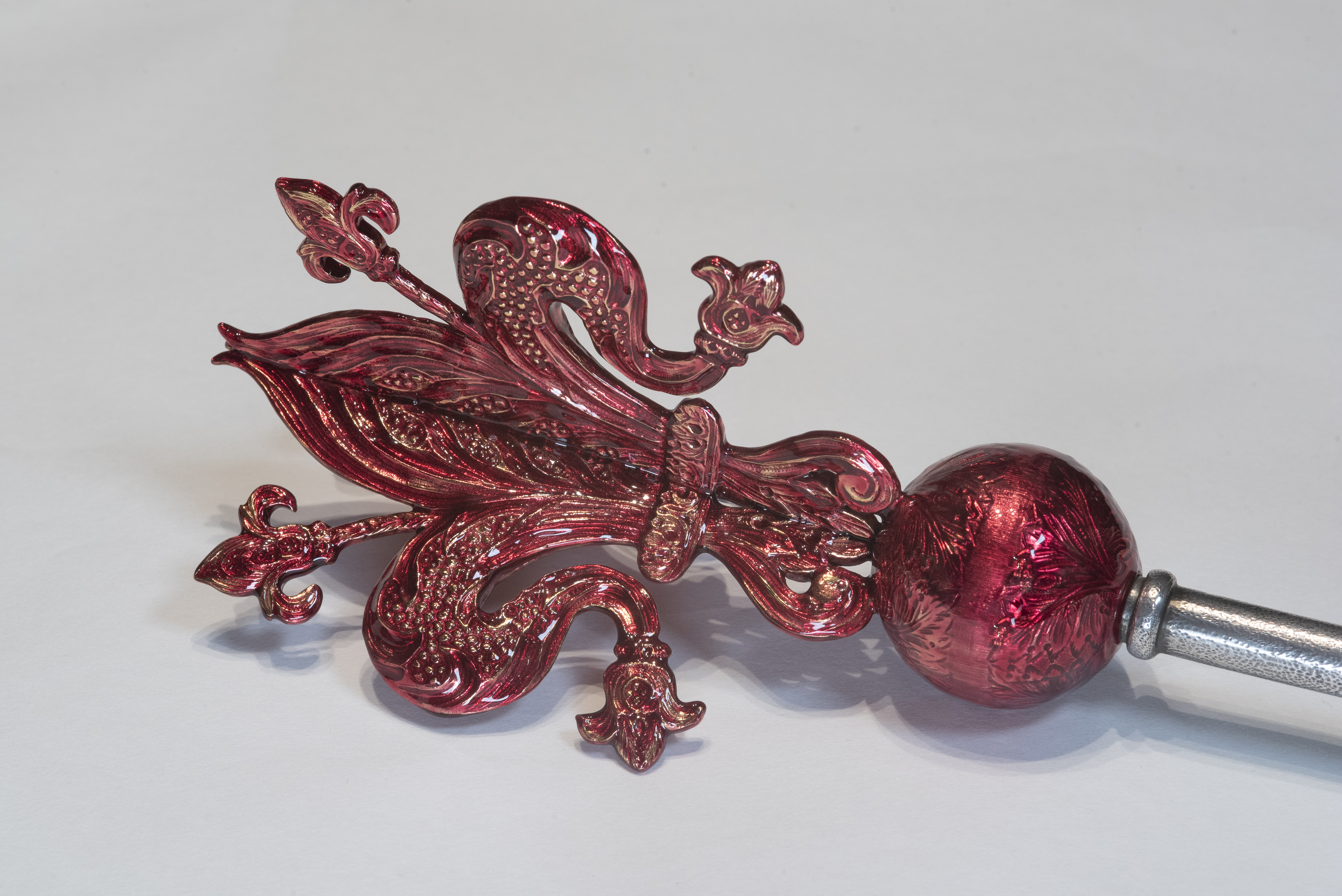
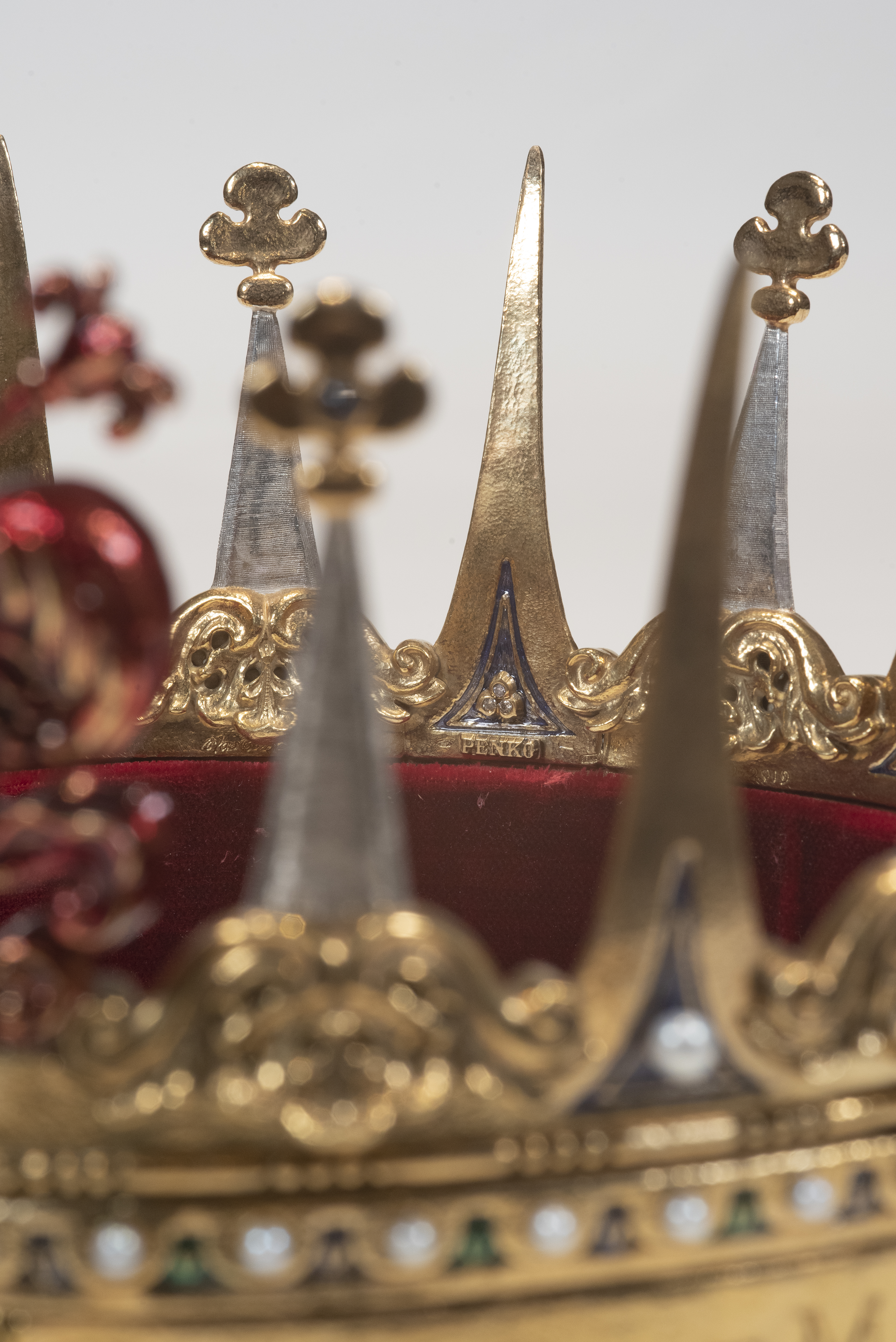
the Collar of the Order of the Golden Fleece, the Sceptre, and the Grand Ducal Crown: three precious artefacts that are being exceptionally presented to the public thanks to the excellence of Florentine artistic craftsmanship. After a meticulous study of written and iconographic sources, master goldsmith Paolo Penko has created three unique works. These are not reproductions (as no comparable originals exist), but true handcrafted creations based on complex philological research and achieved through outstanding technical skill.
All three objects are displayed on cushions made of pure silk velvet, one of which is enriched with gold thread, all manually woven on antique Jacquard looms and placed on a carved velvet table centrepiece featuring a sixteenth-century pattern, thanks to the collaboration with the Fondazione Arte della Seta Lisio.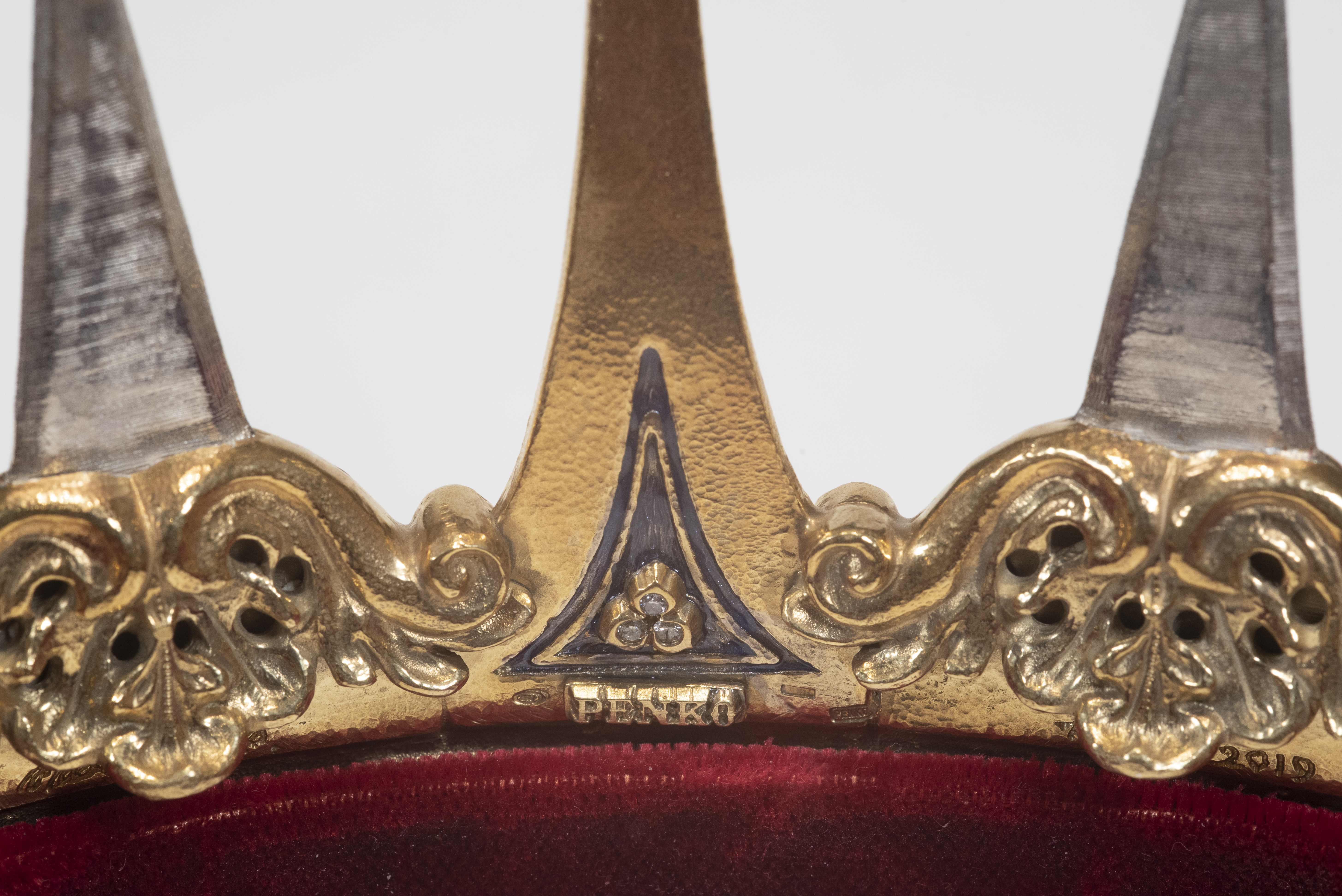
The Collar of the Order of the Golden Fleece, awarded to Cosimo by Charles V in 1546, was created based on its depiction in the portrait of the Duke from the Castello Odescalchi collection in Bracciano (1551). It consists of 25 intertwined firesteels, alternating with elements representing flint stones surrounded by flames; the pendant reproduces the Golden Fleece, linked to the legend of the Argonauts and the quest for the Golden Fleece.
The Grand Ducal Sceptre was made in accordance with the large slate painting by Jacopo Ligozzi (around 1590), depicting the very coronation of Cosimo as Grand Duke, which took place in Rome in March 1570, as well as with portraits of Cosimo as Grand Duke, including the paintings by Giovan Battista Naldini (Uffizi Galleries, 1585) and Ludovico Cardi, known as Cigoli (Palazzo Medici Riccardi, 1603).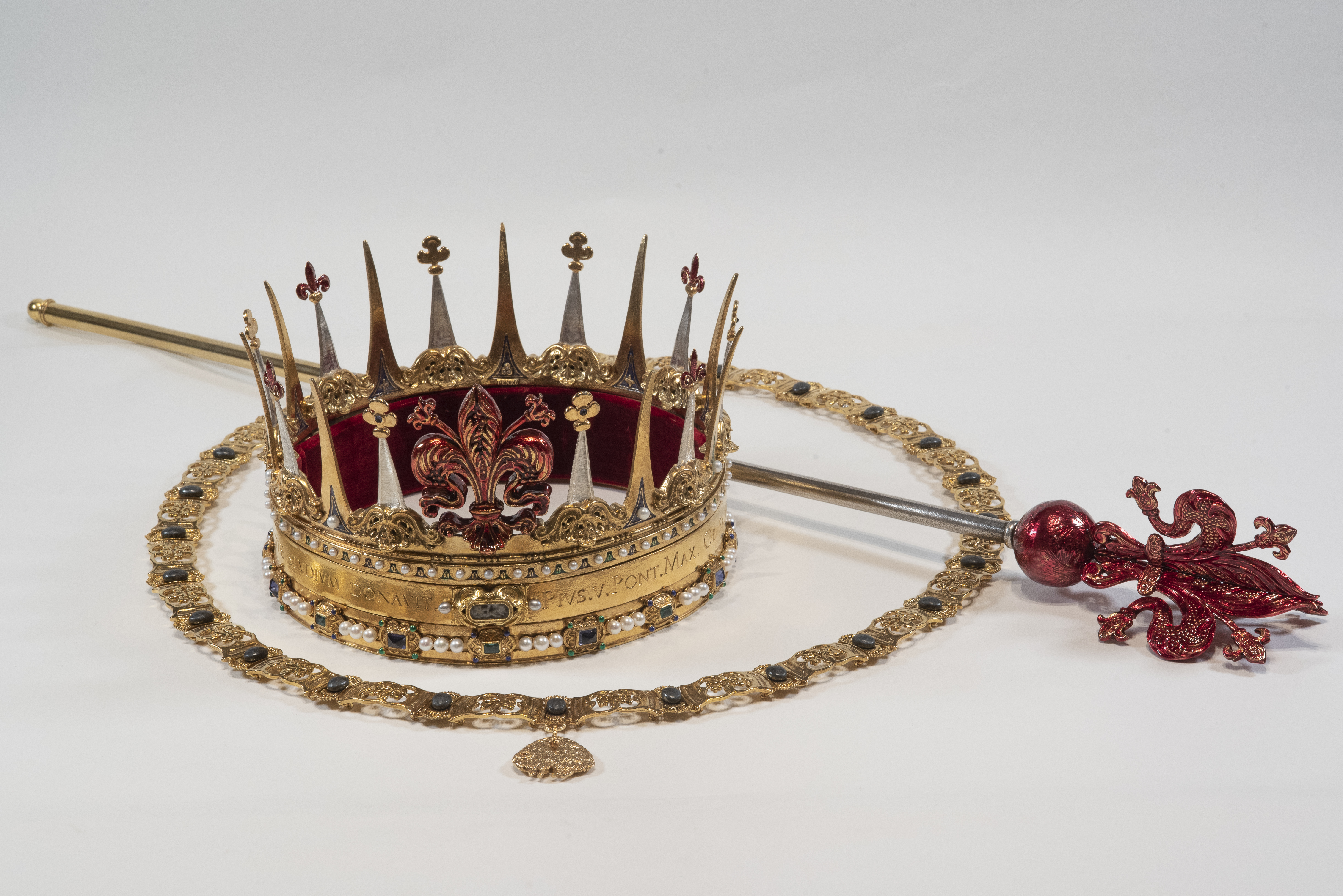
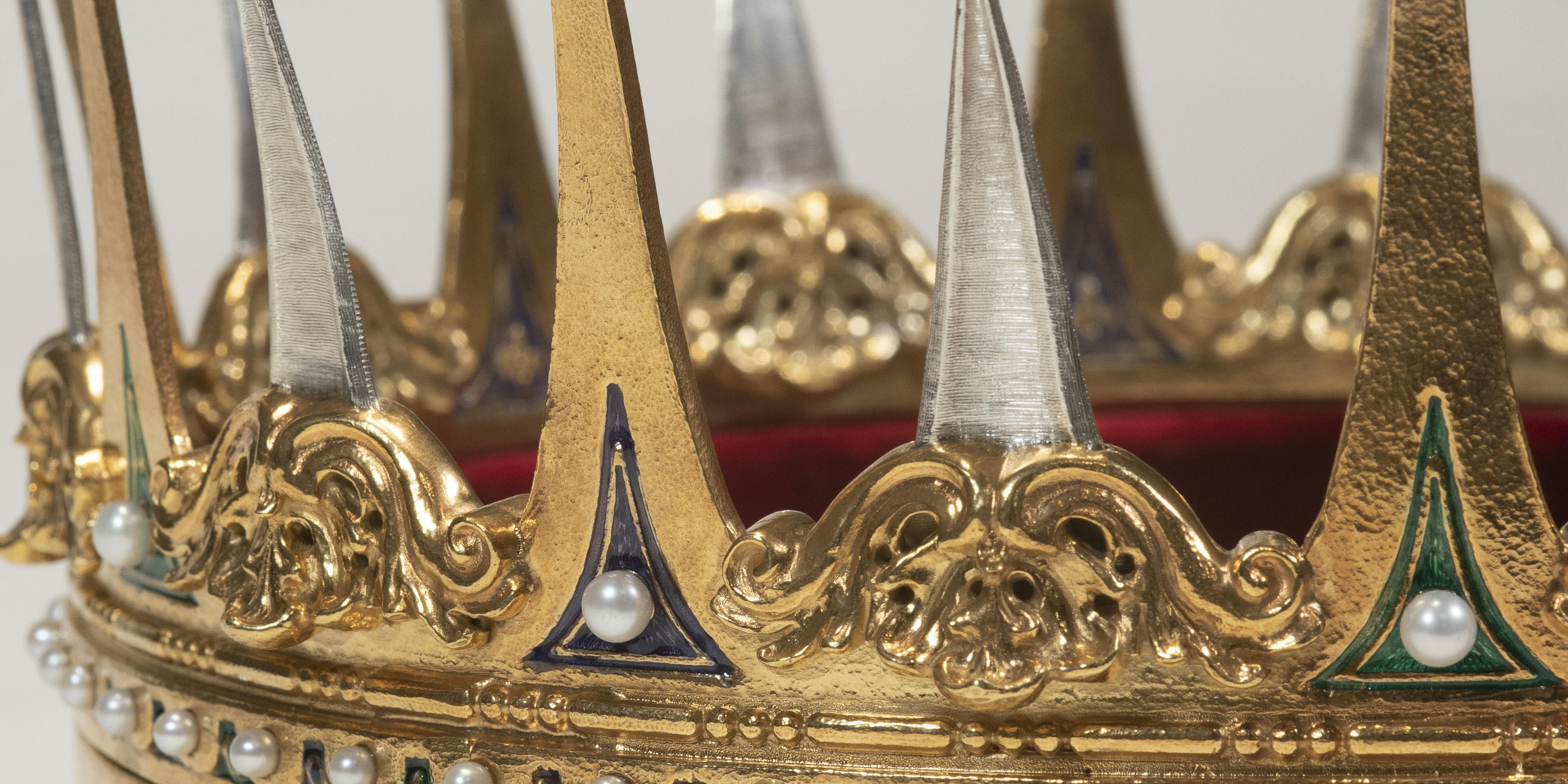
The Grand Ducal Crown, a precious example of goldsmithing art, reproduces instead the design found in the Papal Bull of Pius V dated 24 August 1569, preserved in the State Archives of Florence. It features 19 points, alternating between silver and gold, embellished with gemstones and decorative elements; at the centre is the Florentine lily, enamelled in red with golden highlights.
Beneath it are an astragal with pearls and a frieze of dentils decorated with pearls and enamelled oval elements, while the central band bears the following inscription, chased and engraved with a burin:
Pius V. Pont. Max. ob eximiam dilectionem ac catholicae religionis zelum praecipuumque iustitiae studium donavit
(Pius V, Supreme Pontiff, donated it for exceptional devotion, for his zeal towards the Catholic religion, and for his very special love of justice.)
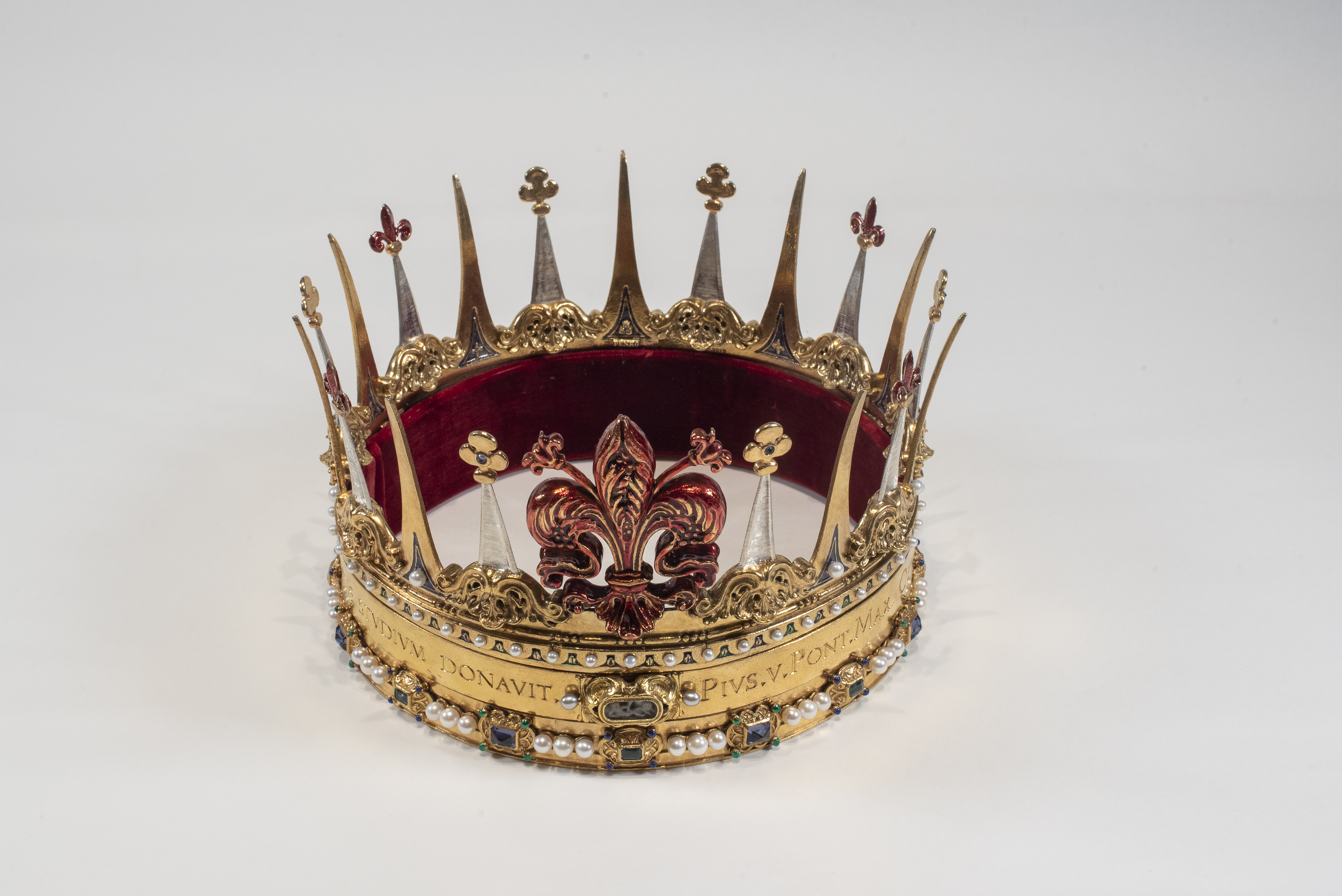
At the centre of the band stands out a sardonyx chalcedony cameo, on which the personification of the Arno River is carved. Below it is a moulding decorated with emeralds and iolites set in mounts, separated by pearls. An example of artistic craftsmanship that this initiative aims to enhance in all its expertise, in complete continuity with the outstanding artisans who surrounded Cosimo I in the mid-sixteenth century, when painters, sculptors, carvers, stucco artists, goldsmiths, and weavers worked together, each through their own artistic language, to celebrate his figure through the wonder that art is able to create.
Lenders: Paolo Penko e Fondazione Arte della Seta Lisio
Upholstery: Antica Tappezzeria Borsellini
Graphic Design: Frush Design
Exhibition Design: Alessandra Carta – Leonardo Boganini Architetti
Explanatory Totems: Tecniform Studio srl
Photography: Daniela Nizzoli Photography
Lighting: Progetto Luce Srl
Security Systems: Ritar Elettronica srl
Catalogue: Edifir - Edizioni Firenze
The initiative “In Cosimo’s Palace. The Symbols of Power” is curated by Carlo Francini, Head of the UNESCO Office of the Municipality of Florence, and Valentina Zucchi, Head of Mediation at MUS.E, with a catalogue published by Edifir.
In Cosimo’s Palace. The Symbols of Power
Museo di Palazzo Vecchio
13/12/2019 – 31/08/2020

For information and reservations: Tel. 055-2768224,