"Dialoghi in seta" - SETA. Palazzo Moroni, Bergamo
The event dedicated to the Art of Silk at Palazzo Moroni.
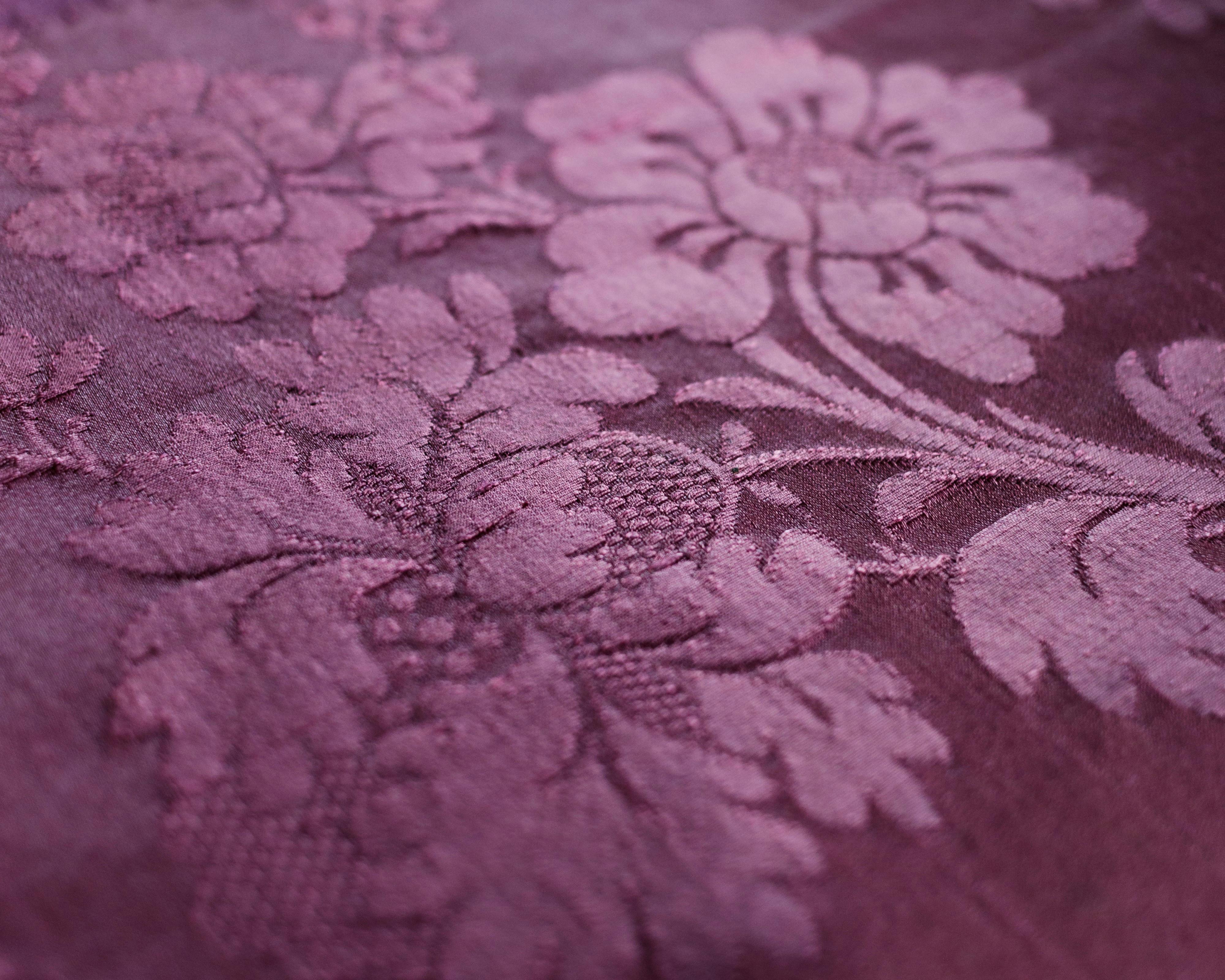
A silk thread runs through the history of Palazzo Moroni: the fortune of the family who built and inhabited it for almost four centuries has been based since the sixteenth century on the textile trade, to which the cultivation of mulberry trees was added in the seventeenth century. The tree features prominently in the family crest, echoes in the surname (morus in Latin, murù in the Bergamasque dialect), and blossoms in spring in the palace’s vegetable garden.
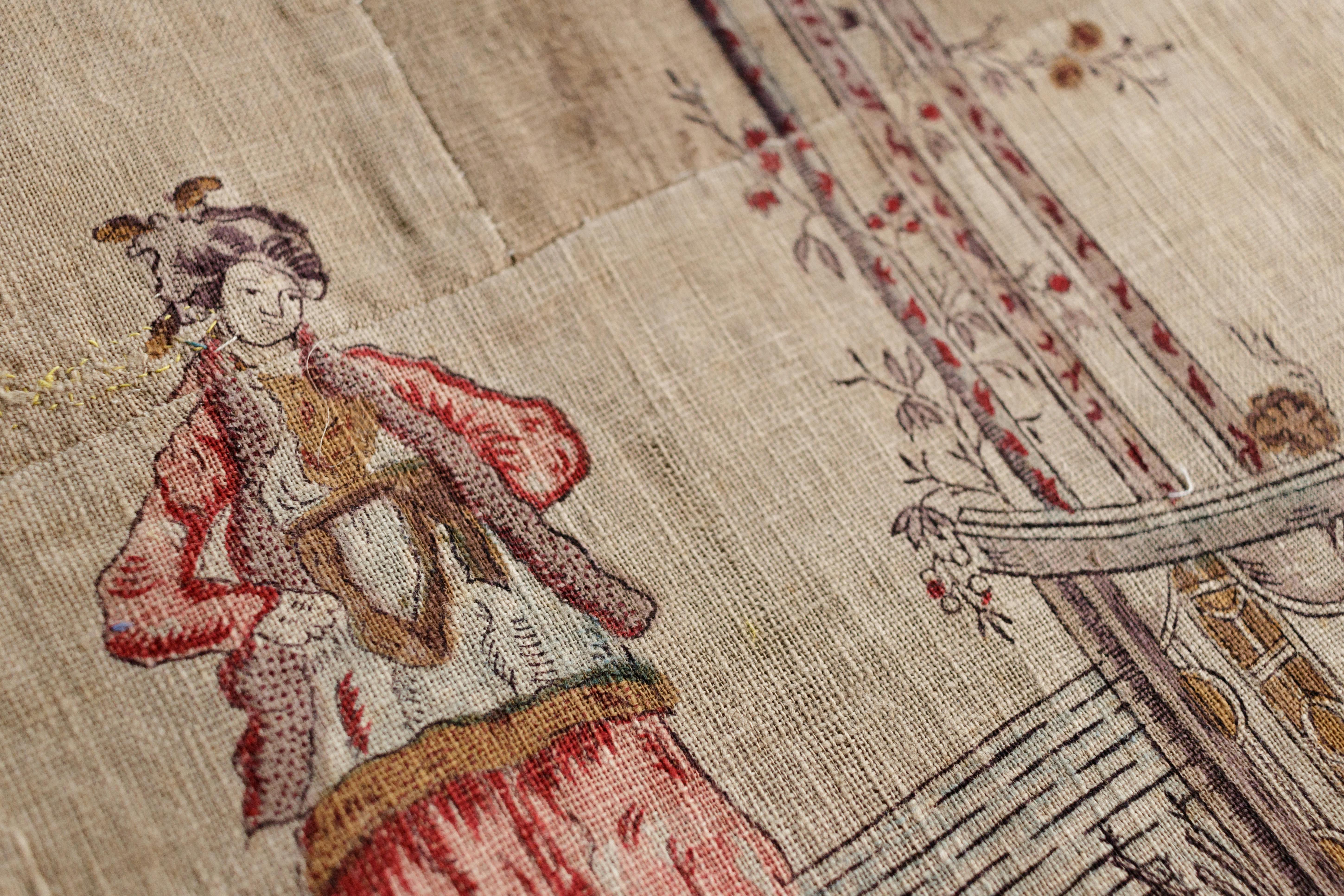
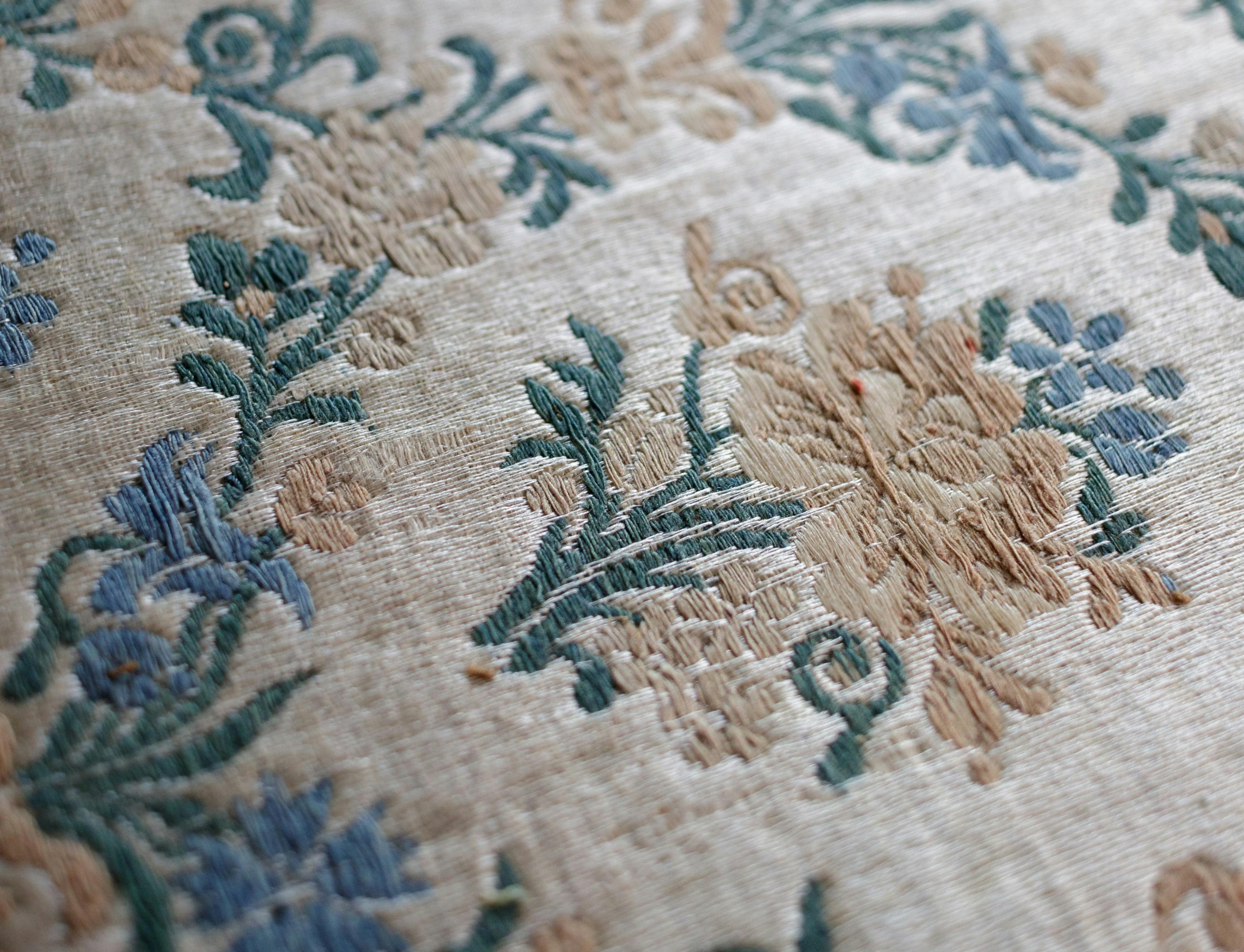
Three days dedicated to the Art of Silk, exploring the fascinating story of the phases of its natural cycle, from the central role that its production activities have played in the history and culture of Lombardy and in the fortune of the Moroni family, to the contemporary and future expressions of its manufacturing traditions.
Through a study day, special guided tours, themed workshops, meetings with authors and textile design experts, installations, exhibition itineraries and an eclectic market exhibition, the event will offer an unprecedented narrative of the palace and its territory, combining past and future through the precious testimony of an ancient excellence.
Study Day and Workshops
The first event of this edition was a study day dedicated to textile and silk production, from the art of spinning to weaving, covering the period between the 14th and 21st centuries. At the Teatro Sant’Andrea in Città Alta, scholars, communicators, experts and professionals from the sector presented their research to the public, offering an in-depth exploration of the historical, economic, social, artistic and costume-related aspects connected to silk culture at Palazzo Moroni and within the Lombard context.
In collaboration with the University of Milan, Università Cattolica del Sacro Cuore of Milan, Fondazione Arte della Seta Lisio of Florence, NABA – Nuova Accademia di Belle Arti, Centro Conservazione e Restauro La Venaria Reale and Taroni.
PROGRAMME 10–11–12 MAY 2024 --> https://fondoambiente.it/il-fai/beni/seta-a-palazzo-e-giardini-moroni/programma
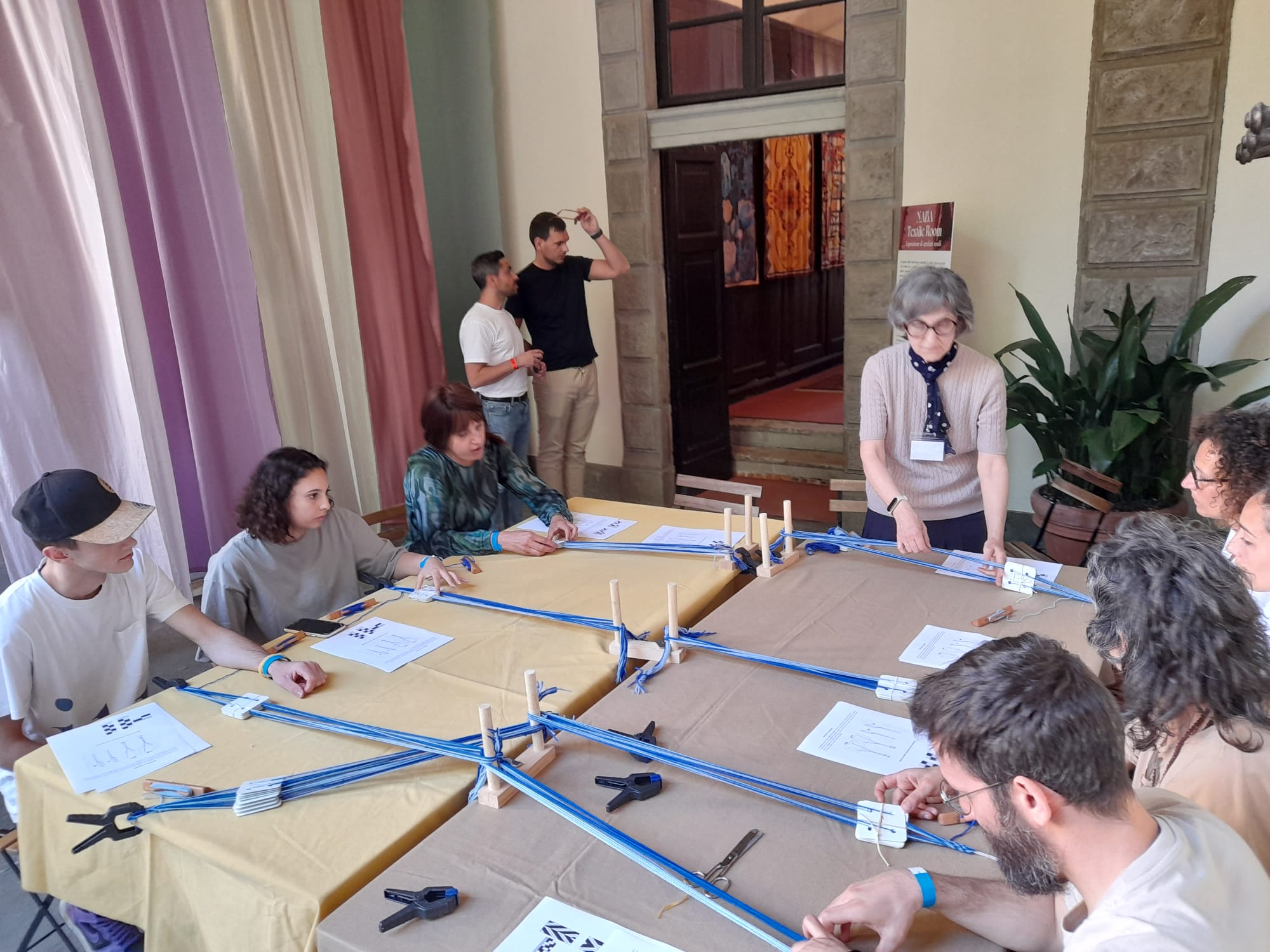
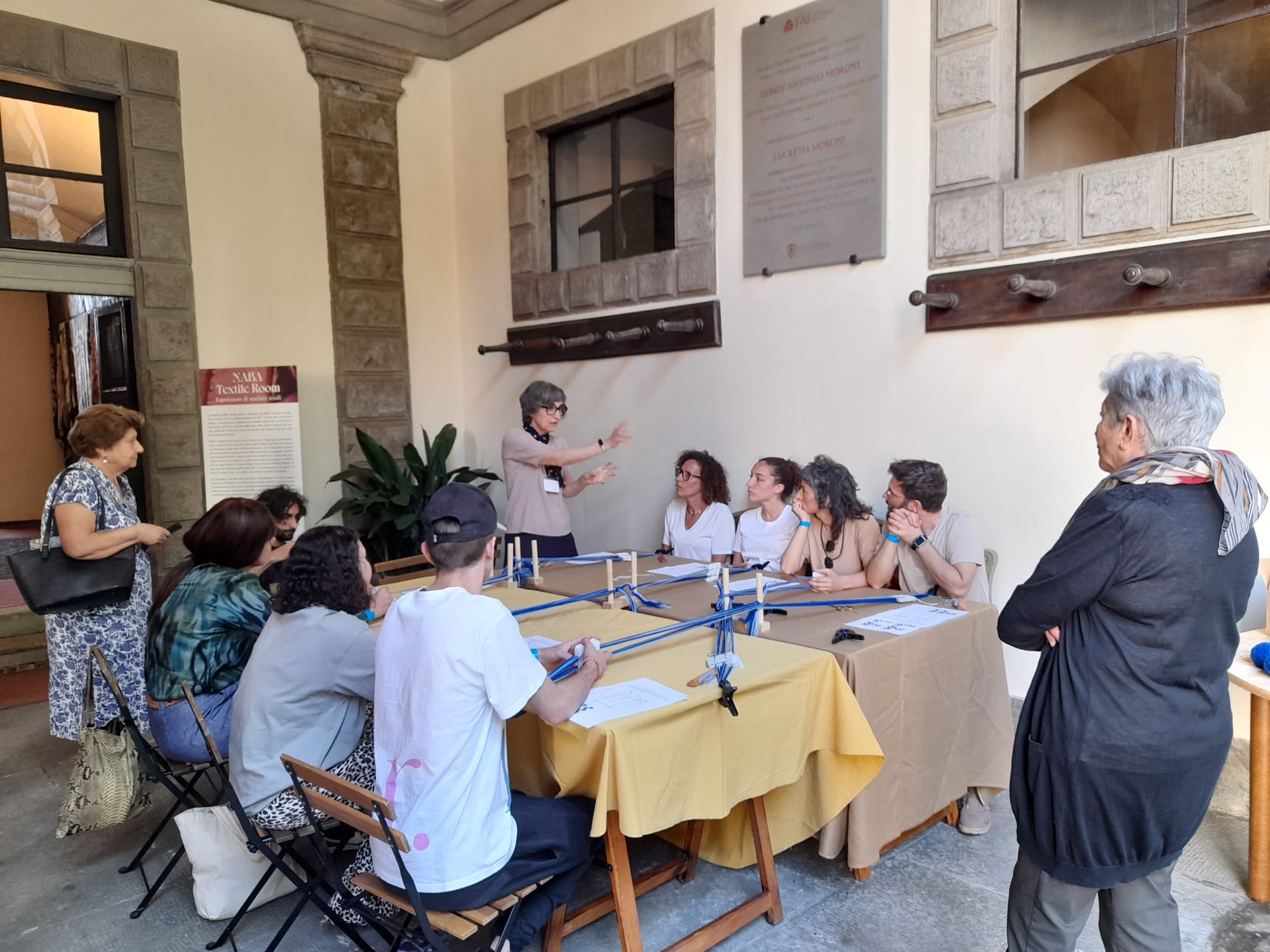
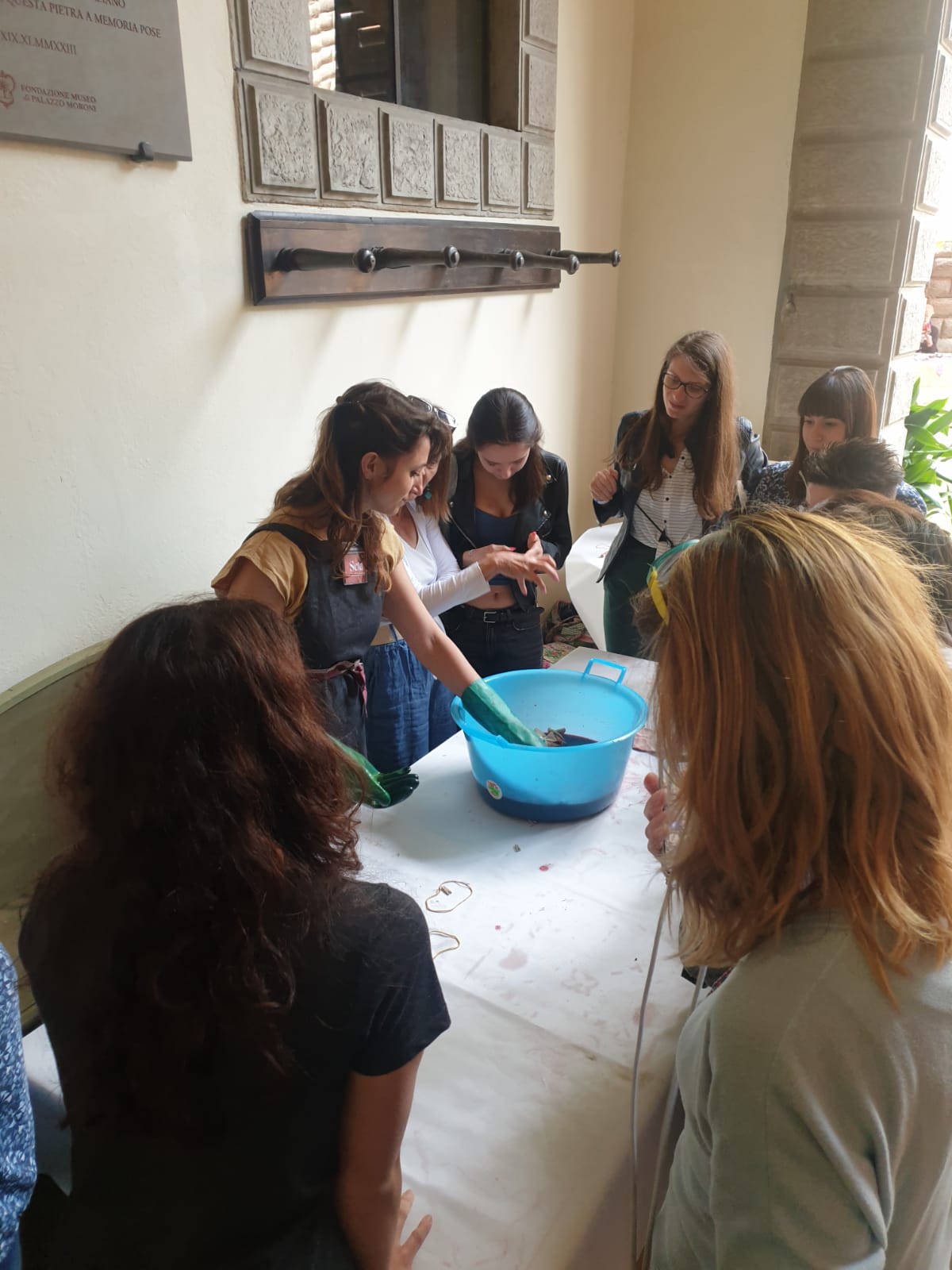
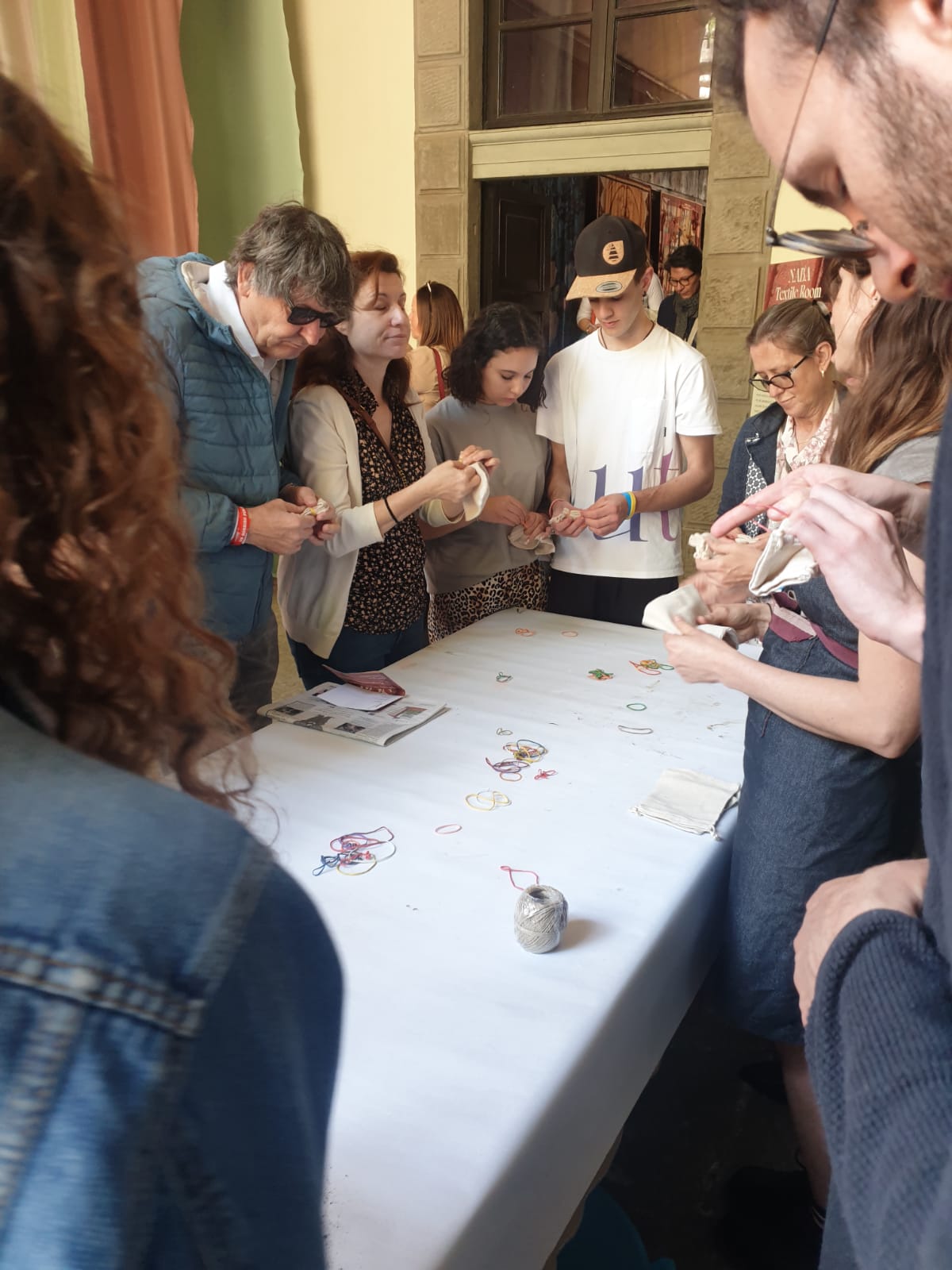
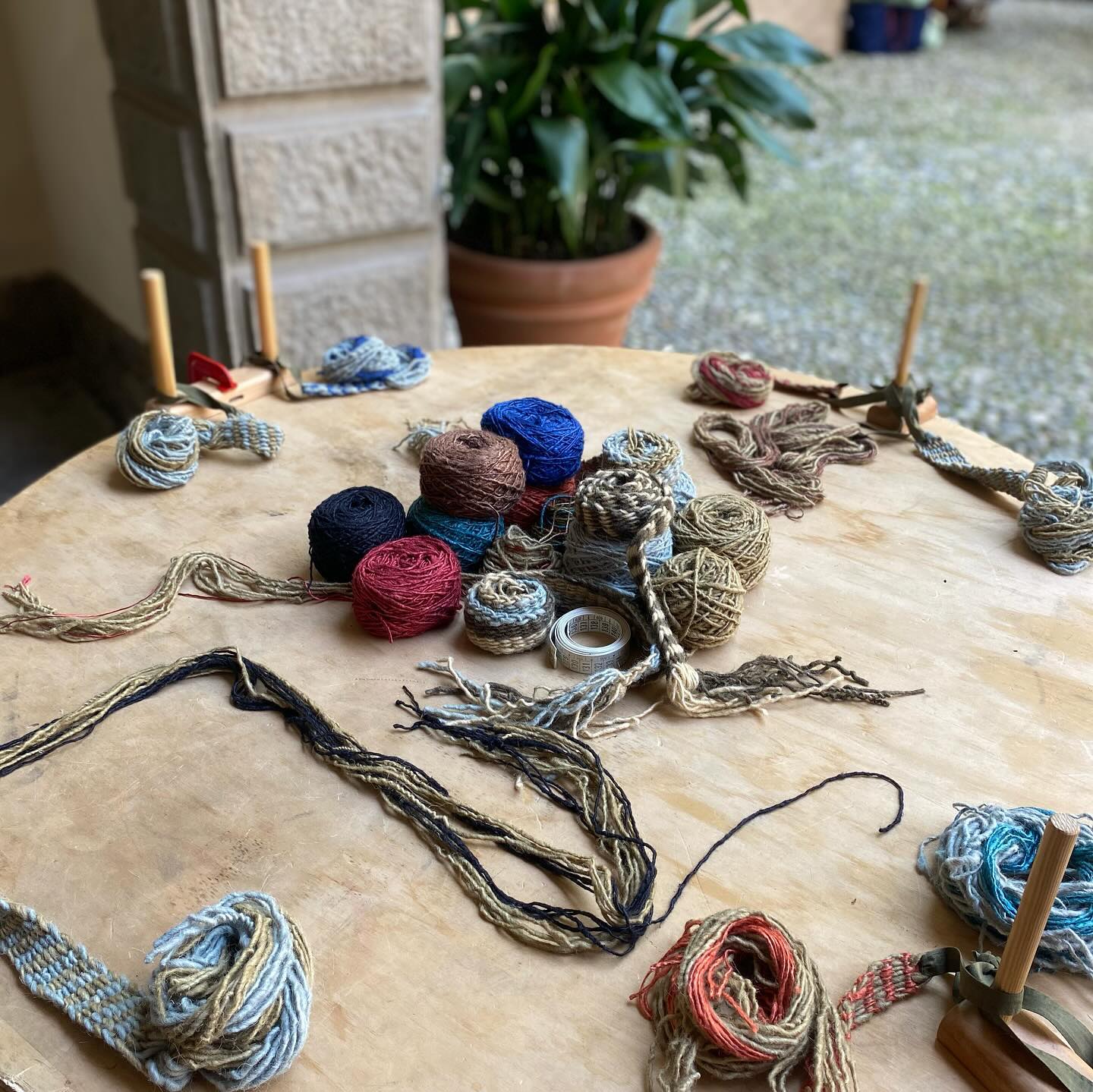
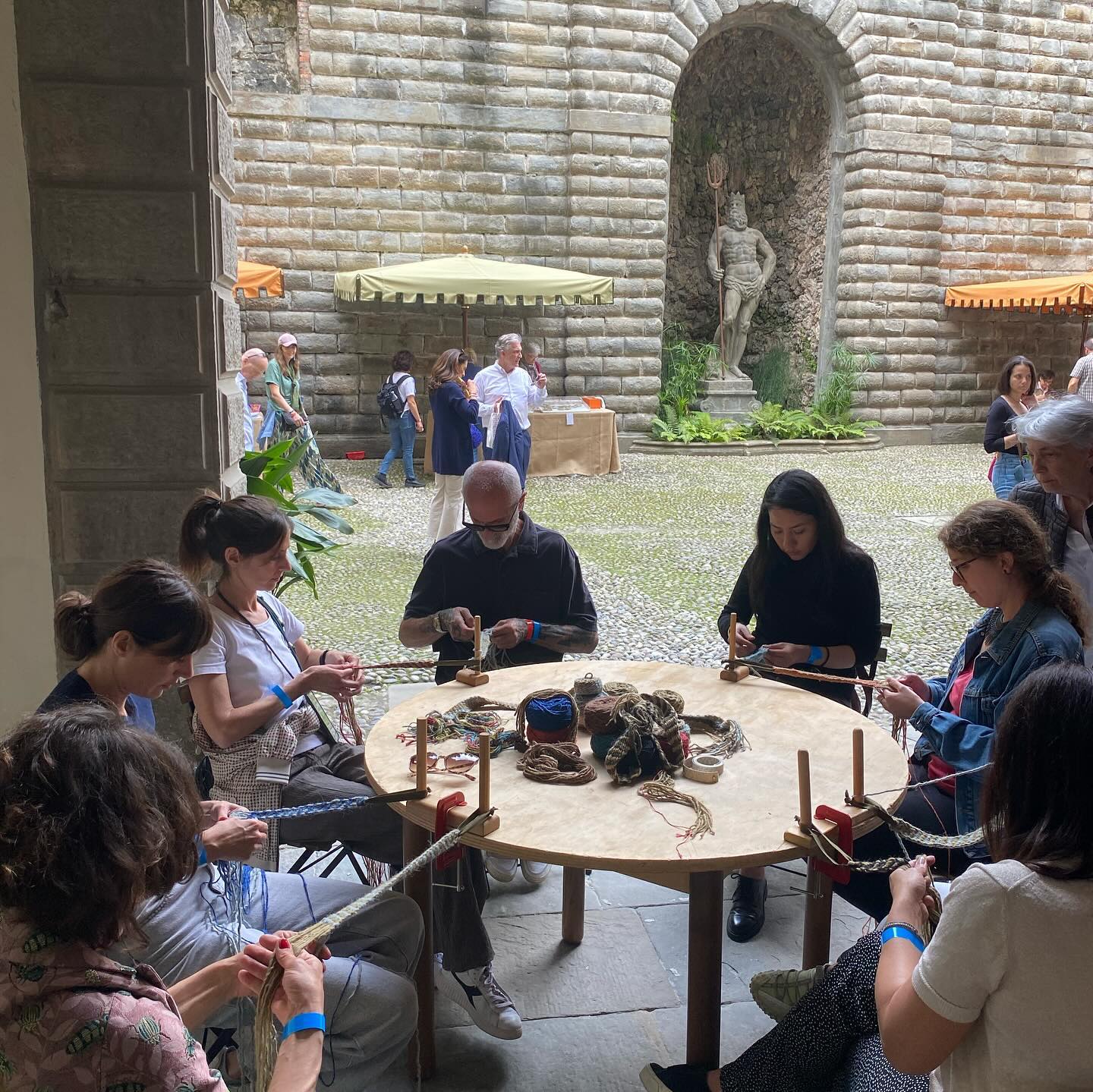
Free textile workshops were held on 11 and 12 May. In particular, the following workshops took place:
Curated by Fondazione Arte della Seta Lisio of Florence and Fondazione Chierese per il Tessile e per il Museo del Tessile
Saturday 11 MAY – by reservation
- 11:00 | Natural Dyeing Workshop
- 14:30 | Lace Knotting Workshop
- 16:00 | Tablet Weaving Workshop
Sunday 12 MAY – by reservation
- 11:00 | Natural Dyeing Workshop
- 14:30 | Frame Loom Weaving Workshop
- 16:00 | Finger Weaving Workshop
The Exhibition
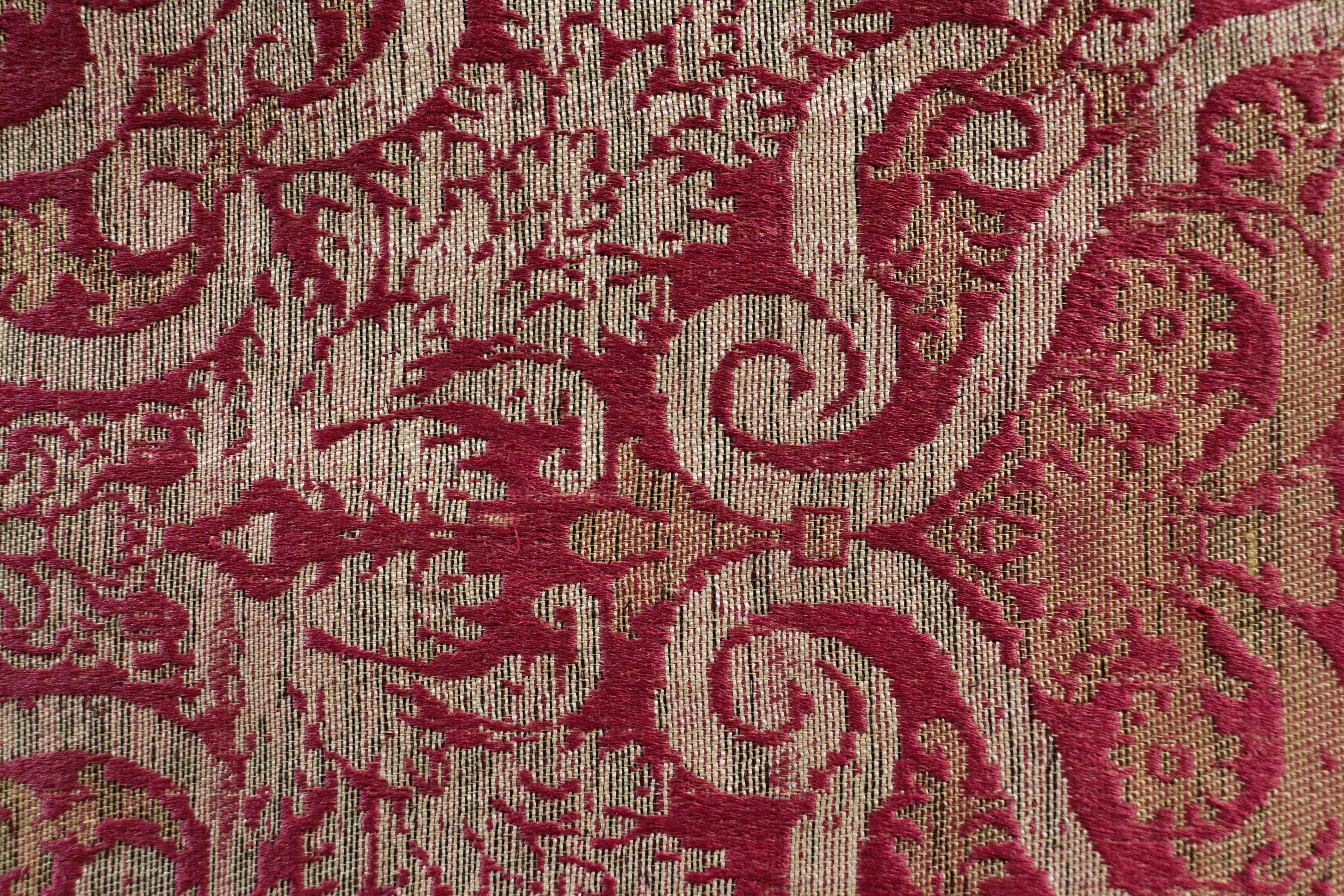
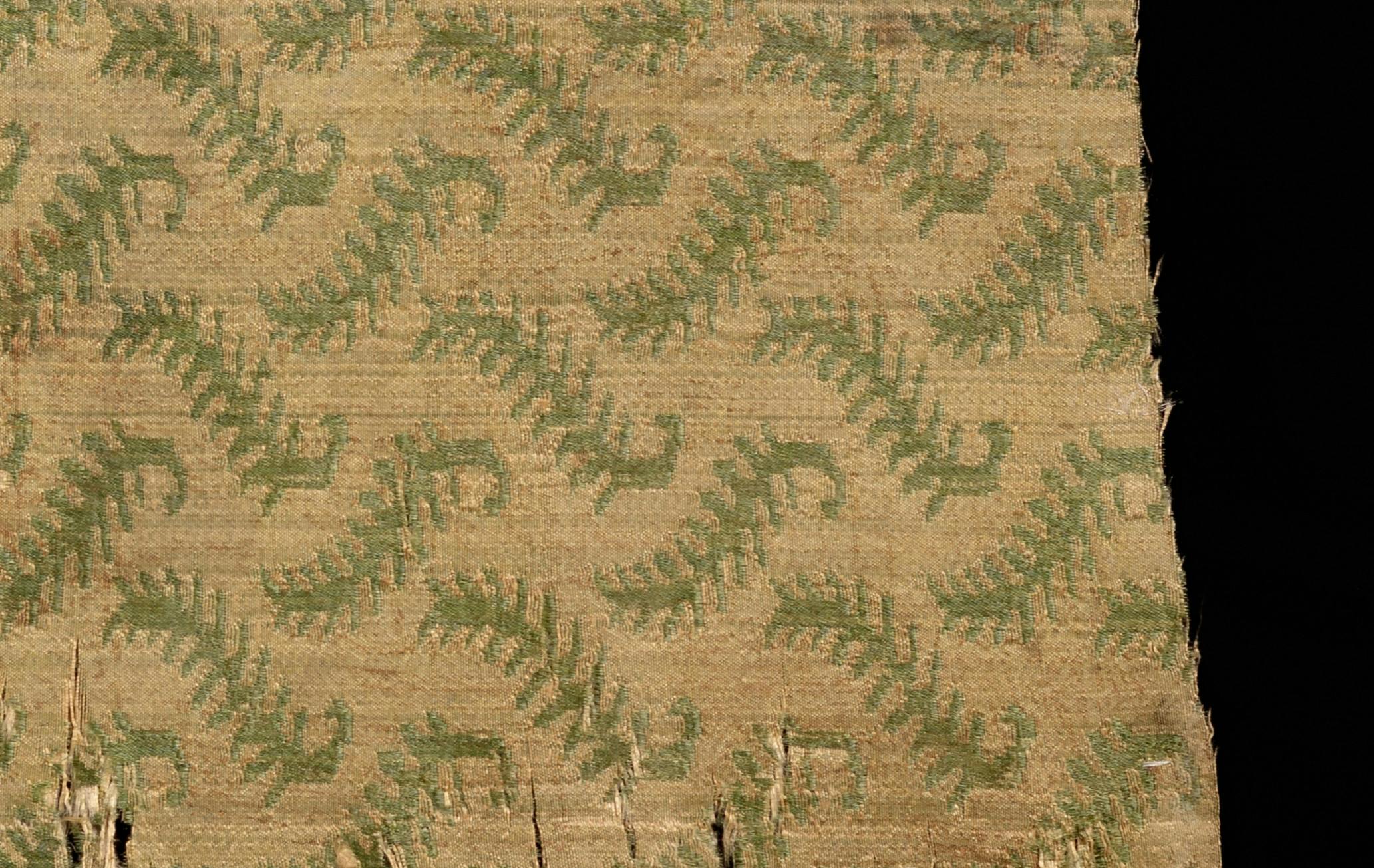
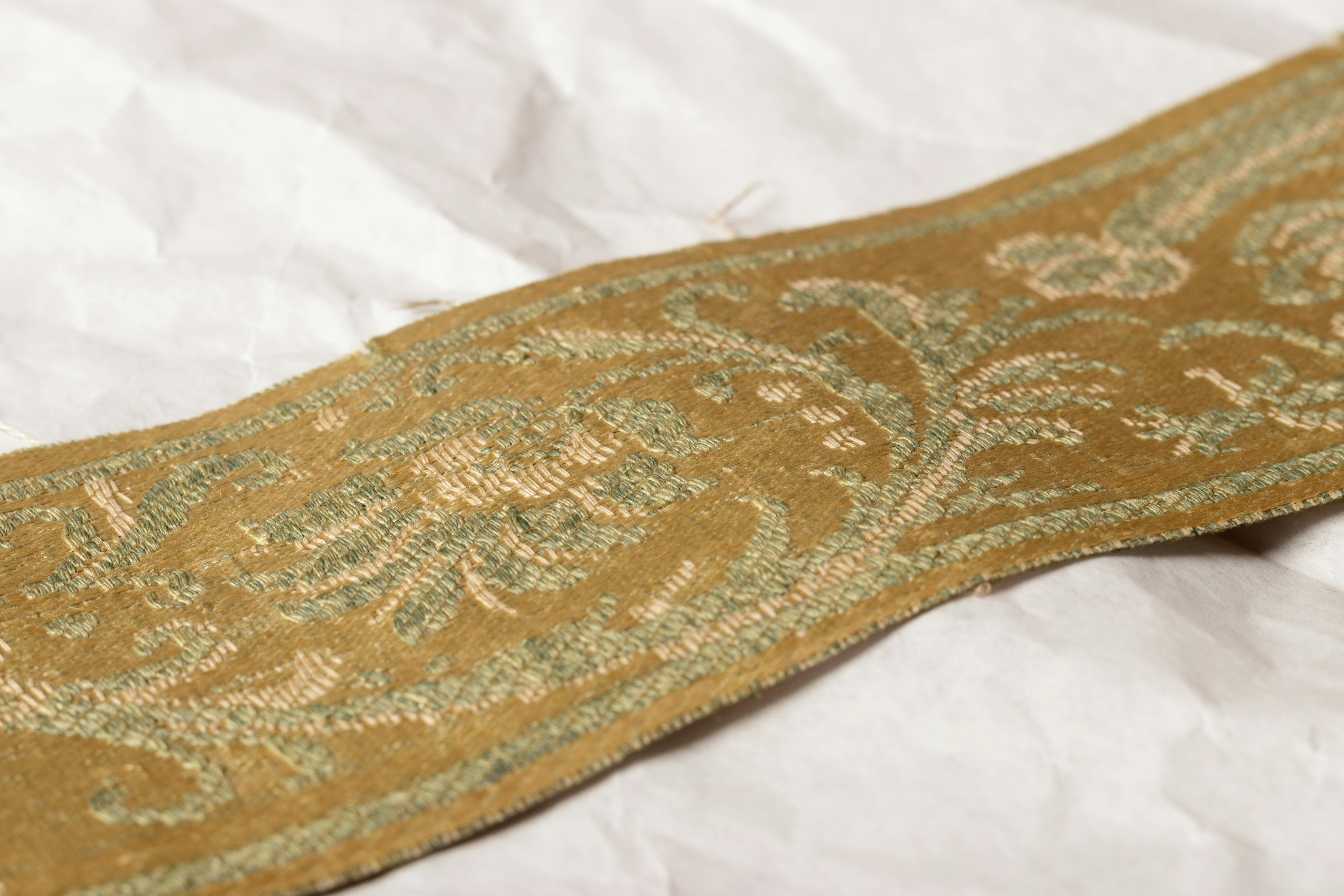
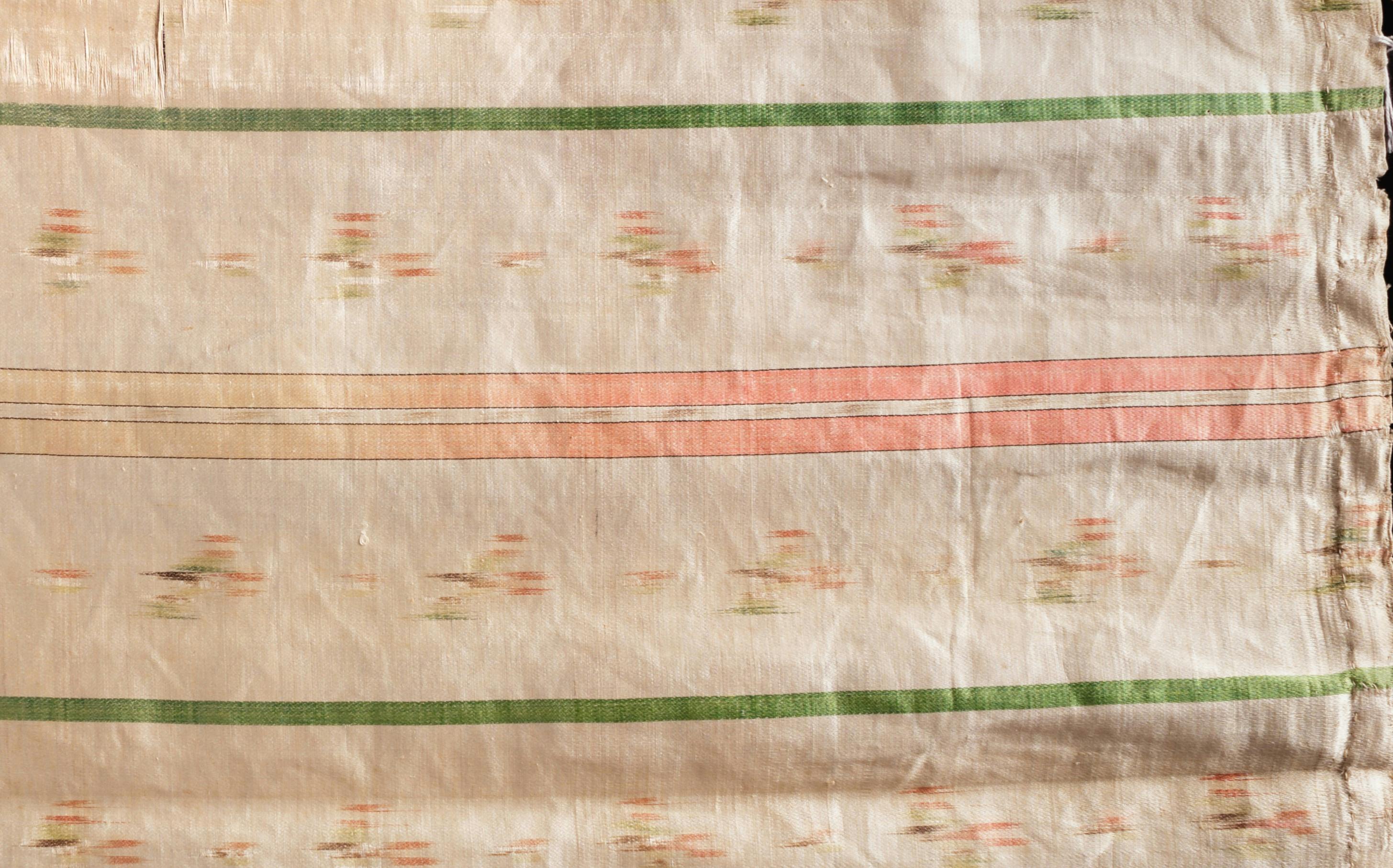
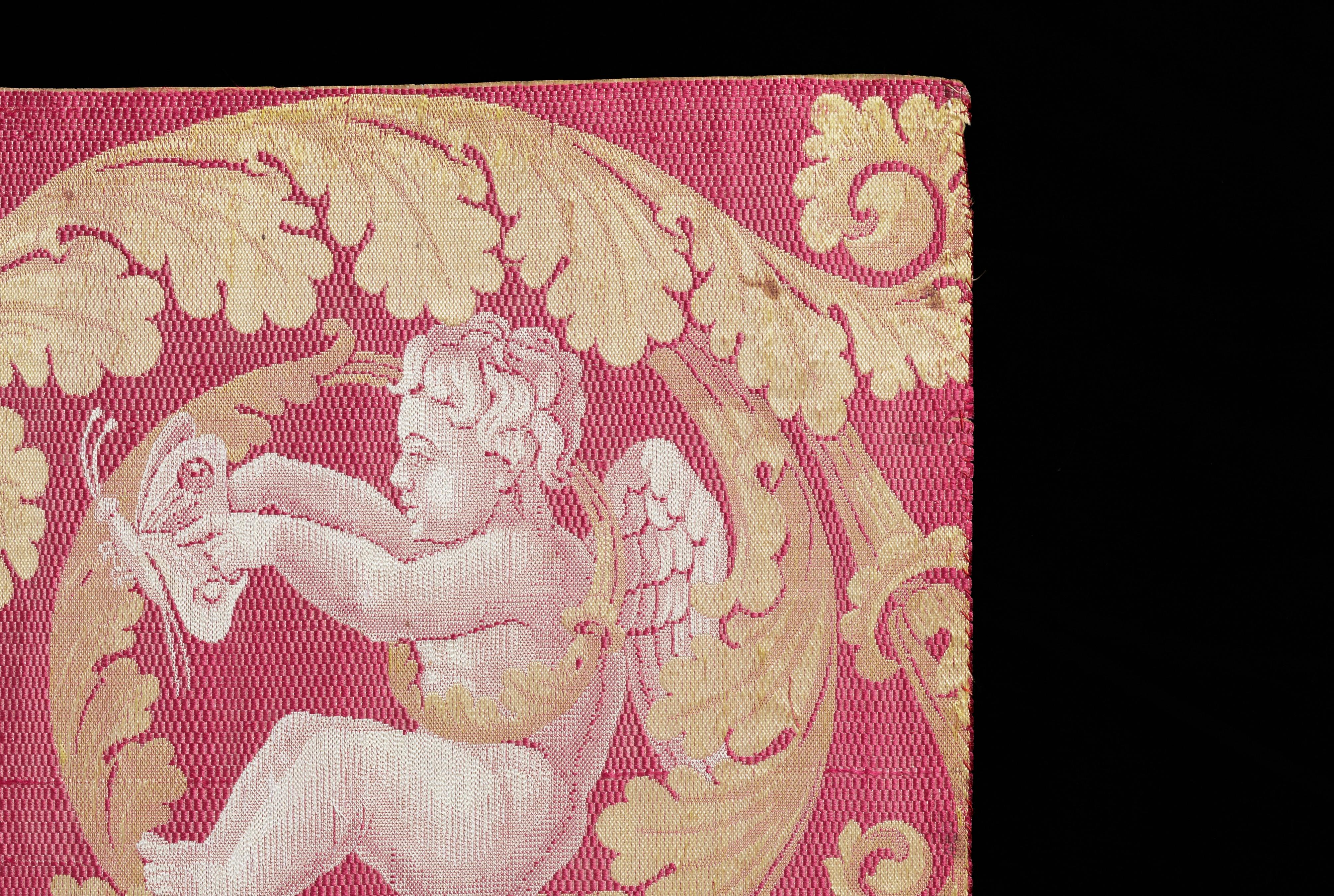
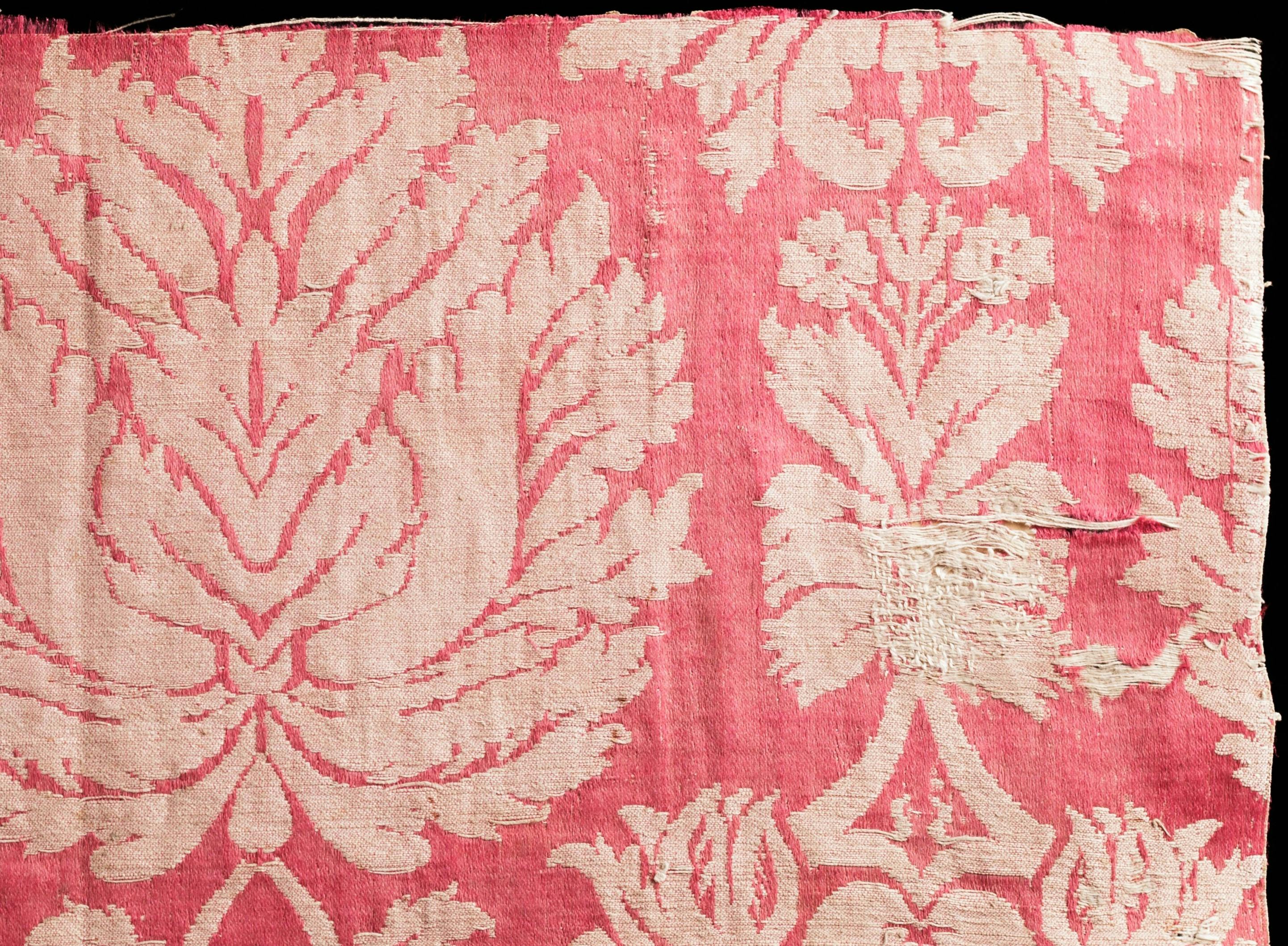
Silk and linen brocatelle
Silk and linen brocatelle
Golden Age Hall
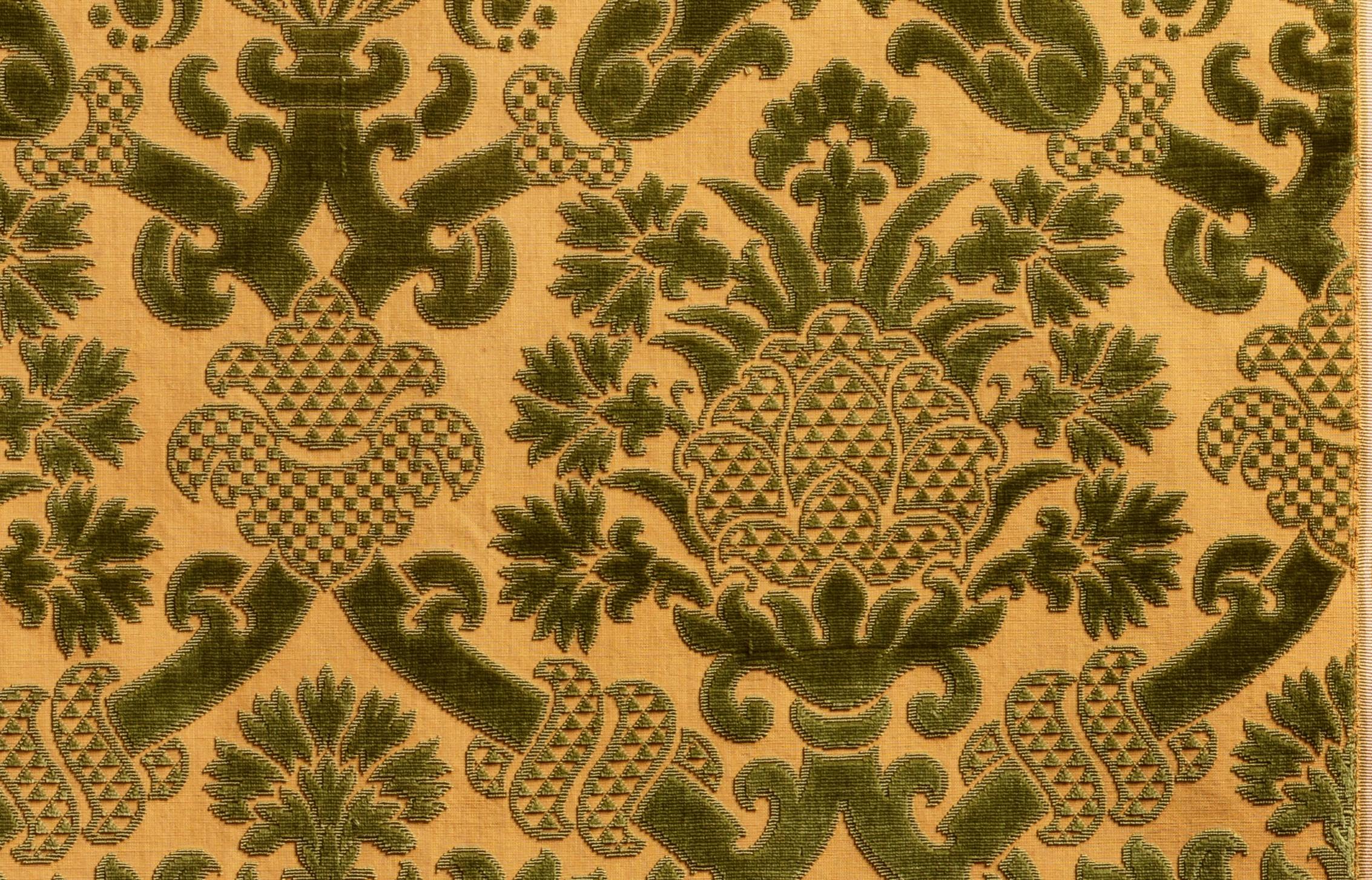
The textile is part of a Florentine production datable between 1530 and 1550. The design is characterized by a graphic composition of closed lattice patterns with a pinecone at the centre, a motif widely diffused from the end of the 15th century onwards. The garlands defining the lattice enclose four double-scroll motifs that serve as frames for the pinecones. This type of design was created using very sumptuous techniques, such as silk satins brocaded with gold and silver or brocatelles. The exhibited textile is made in brocatelle, a widely used textile technique that employs silk and linen in the weft: it gives relief to the designs and also allows production costs to be contained. In this case, there is also a silver lamé weft that lends brightness to the overall composition. The translation of this design into velvet was carried out in 1909 by the Arte della Seta Lisio of Florence.
The clothing worn by Gian Gerolamo Grumelli, known as the Knight in Pink, portrayed by the famous painter Giovanni Battista Moroni, is made of silk satin (coral red) with embroidery in silver threads and is chronologically close to the exhibited textile. The portrait is in fact dated 1560 and the garment reflects the fashion of the mid-16th century. During this period, the colours pink and red were symbols of wealth due to the rarity of the materials and the complexity of the dyeing processes.
© Fondazione Arte della Seta Lisio, Florence | Ancient Textile Collection | Photo Matteo Farinella