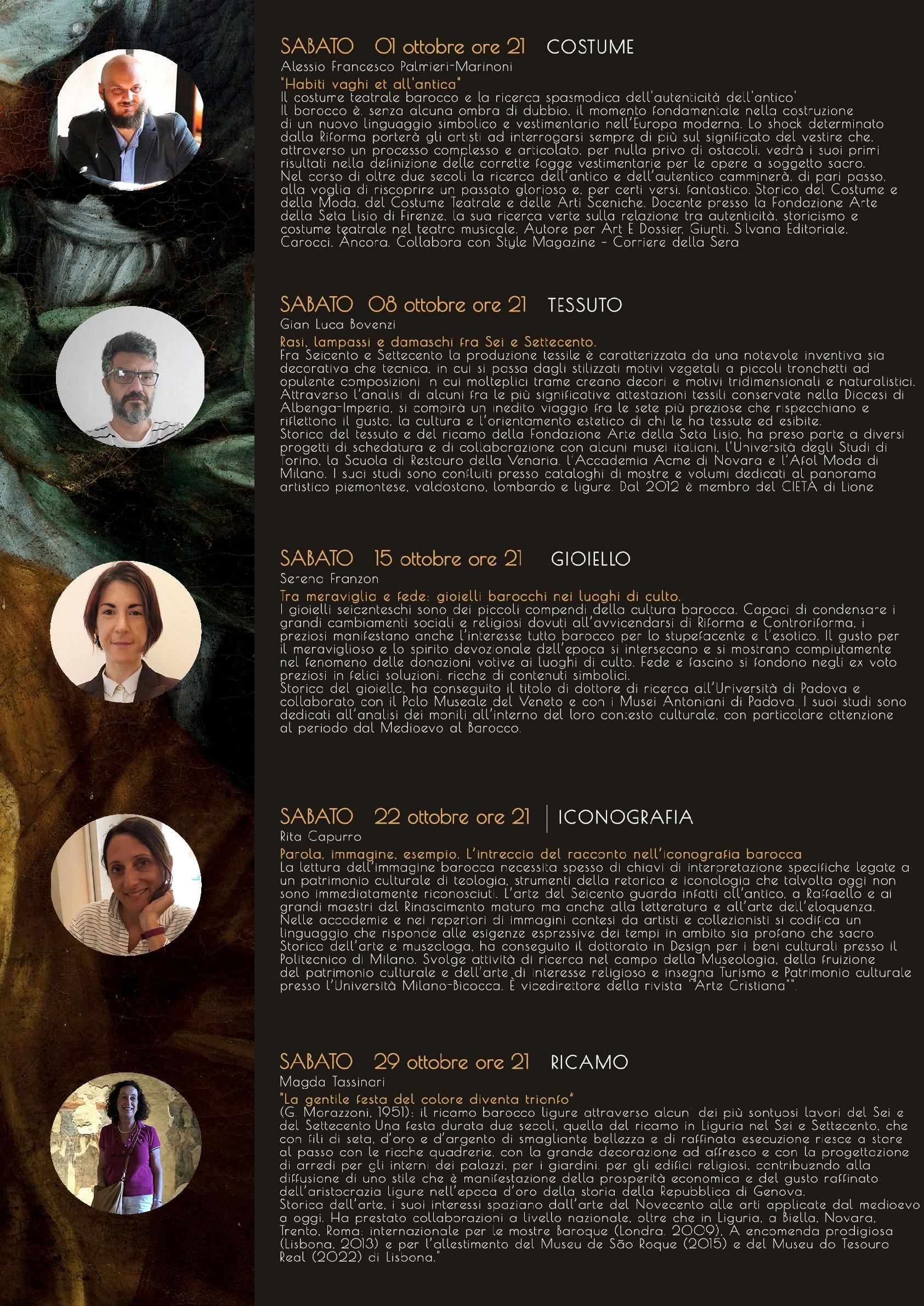
Trame Barocche: conferenza #5 "La gentile festa del colore diventa trionfo" M. Tassinari
The events (available online or in person) will be held on the five Saturdays of October: Saturday 1; 8; 15; 22; 29
all meetings will be at 9:00 PM at Palazzo Oddo, Via Roma 58, 17031 Albenga (SV).
---
#5 Fifth conference of the cycle "Trame barocche. Tra tessuto e iconografia per svelarne i significati". The expert Magda Tassinari speaks for the "Embroidery" sector with "La gentile festa del colore diventa trionfo” (G. Morazzoni, 1951): Ligurian baroque embroidery through some of the most sumptuous works of the seventeenth and eighteenth centuries For in-person participation:
Limited seats available until full. In-person tickets can be purchased at: Museo Diocesano Albenga Ticket Office, IAT Albenga, directly at Palazzo Oddo the evening of the event.
Info: www.formaelucis.com
contacts: formaelucis@diocesidialbengaimperia.it
COSTS
Single conference: Euro 30
Full cycle: Euro 120
Reductions/ Reduced rate for: under 18, over 70, teachers
Single conference: Euro 18
Full cycle: Euro 80
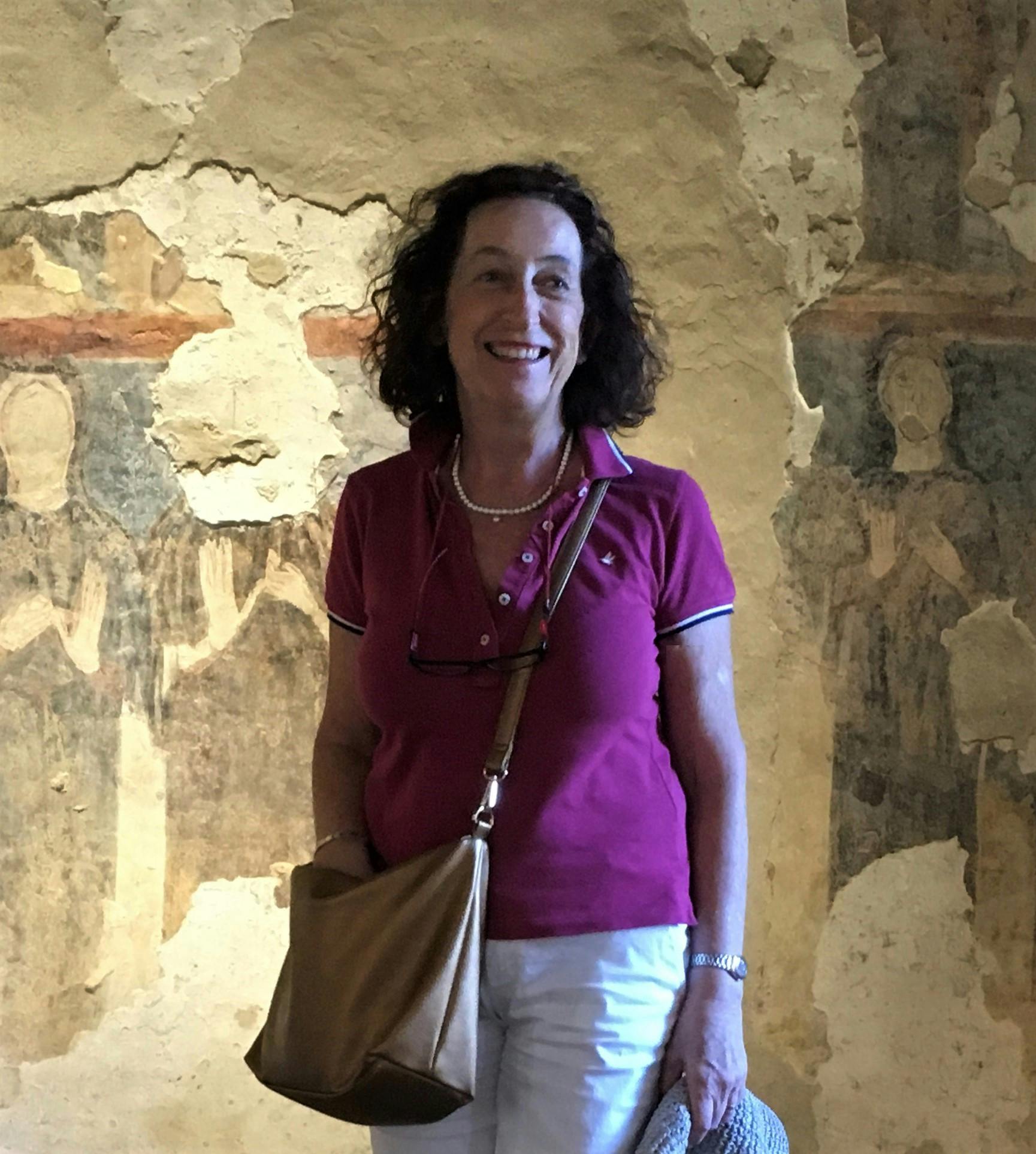
Embroidery | The Gentle Celebration of Color Becomes a Triumph
Embroidery | The Gentle Celebration of Color Becomes a Triumph
Ligurian Baroque Embroidery Through Some of the Most Sumptuous Works of the 17th and 18th Centuries
Curated by Magda Tassinari
October 29, 2022 at 9:00 PM A celebration that lasted two centuries—that of embroidery in Liguria during the seventeenth and eighteenth centuries—which, with silk, gold, and silver threads of dazzling beauty and refined execution, managed to keep pace with rich picture galleries, grand fresco decorations, and the design of furnishings for palace interiors, gardens, and religious buildings, contributing to the spread of a style that was a manifestation of the economic prosperity and refined taste of the Ligurian aristocracy during the golden age of the history of the Republic of Genoa.